



Every year, healthcare brands invest significantly in healthcare market research and still get it wrong. Not because teams are not capable, or the methodologies are outdated. More often than not, it comes down to the wrong respondents answering the survey questions.
In healthcare, the quality of insights depends entirely on the quality of the audience behind them. And when the audience is not properly verified, the risks are much bigger than just flawed data. It can impact drug development, delay critical decisions, affect regulatory outcomes, and ultimately influence patient care.
It is due to these reasons that the industry is moving away from broad, general consumer panels toward verified, specialty-specific healthcare audiences. When the stakes are this high, accurate insights are essential for managing drug development pipelines, regulatory submissions, and ultimately, patient outcomes.
The State of Healthcare Market Research in 2026: Why ‘Good Enough’ Panels No Longer Make the Cut
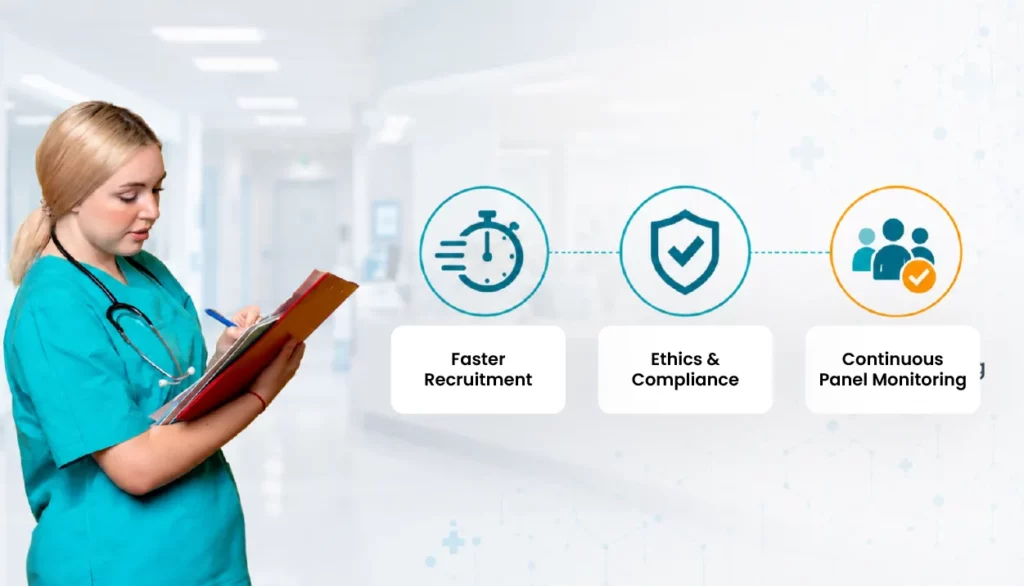
The post-pandemic years accelerated everything in healthcare market research (McKinsey 2024). The pressure to move fast while maintaining rigor went through the roof.
At the same time, regulators and payers have become considerably less forgiving about evidence quality. The bar for what counts as credible, actionable research has moved. AI-driven study design has made things sharper on the methodology side (McKinsey 2025), which is genuinely useful. However, sharper methodology running on weak sample quality is still weak research. When unverified respondents make it into a healthcare study, the consequences are operational. Decisions get made on flawed inputs. Launches get timed wrong. Resources go to the wrong markets. The cost of a bad panel shows up well after the fieldwork closes.
Why the Distinction Matters for Sample Buyers

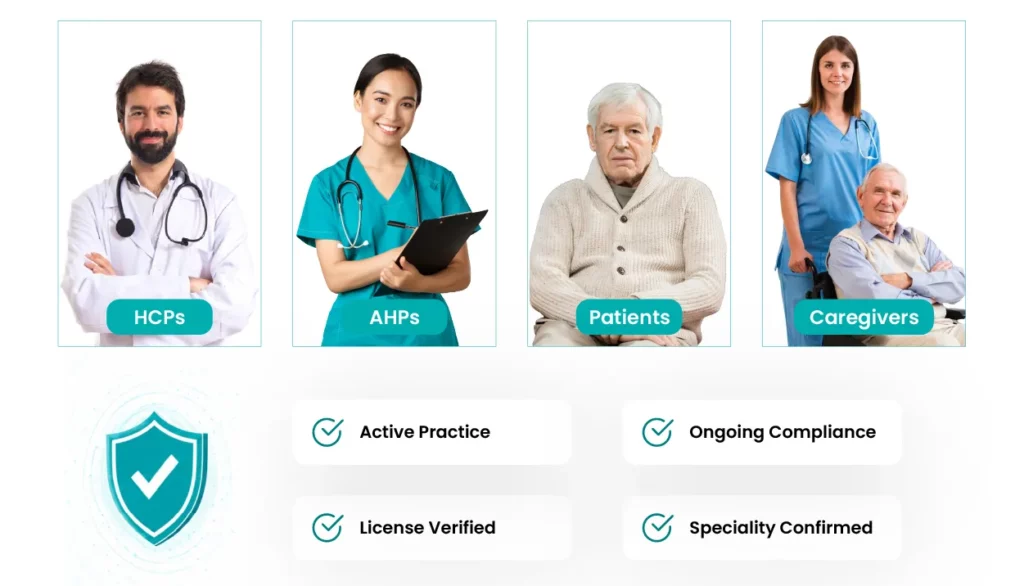
The healthcare respondent ecosystem is more layered than most research buyers account for. A verified HCP (Healthcare Professional) panel consists of licensed, actively practicing healthcare professionals whose credentials are validated against official medical registries, not self-declared profiles.
The need for verified healthcare panels cuts across several buyer types, each with their own research priorities.
- Market research agencies need faster feasibility and cleaner data to deliver client commitments without overrunning timelines.
- Pharma and biotech companies rely on quality panels for pipeline validation, competitive intelligence, and launch readiness, areas where bad data has direct commercial consequences.
- Medical device manufacturers need genuine clinical feedback loops and usability input from practitioners who actually work with the equipment.
- Healthcare consultancies and media agencies need audience intelligence that’s specific enough to build content strategy and policy recommendations.
Rigorous verification of survey respondents is hence essential for cross-referencing licensure databases, building specialty profiles that go beyond job titles, and maintaining compliance standards that don’t expire after the initial recruitment.
Choosing the High-Quality Healthcare Panel
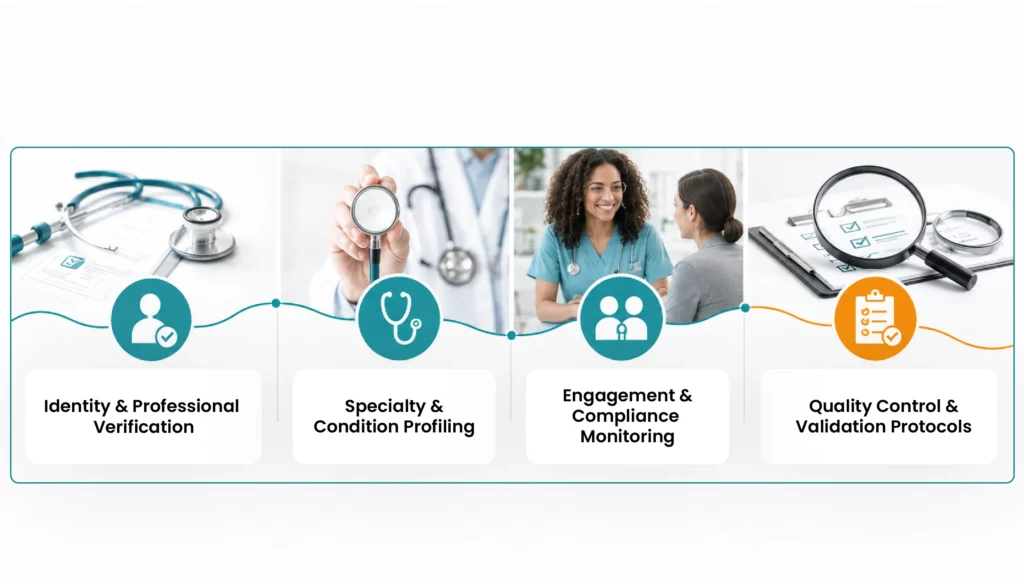
In healthcare research, where insights can influence product launches, regulatory decisions, treatment strategies, and patient outcomes, the strength of the panel directly impacts the confidence brands can place in their research.
A high-quality healthcare panel is built on four critical foundations: verified professionals, precise audience profiling, active engagement monitoring, and rigorous quality control. Rather than relying on self-reported credentials, leading panels validate healthcare professionals through licensing records, medical associations, and verified databases to ensure respondents are actively practicing and qualified to provide relevant insights. They also enable granular targeting across specialties, therapeutic areas, practice settings, and patient conditions, ensuring studies reach the right experts instead of broad respondent groups.
Continuous engagement and compliance monitoring further helps identify inattentive participation, fraudulent activity, and low-quality responses before they affect outcomes.
Equally important is market-specific precision. A healthcare panel built for global research must combine broad international reach with localized verification and recruitment standards. The rigor used to verify and engage healthcare professionals in one market should reflect the regulatory and professional realities of that specific geography.
Together, these elements are what separate a healthcare panel that simply delivers responses from one that delivers trustworthy, decision-ready insights.
Borderless Access healthcare panels combines deep healthcare expertise, rigorous verification processes, and global operational strength to help healthcare organizations generate those insights they can trust.
With access to over 1.6 million physicians, 680,000+ allied healthcare professionals, and more than 2.2 million patients and caregivers across continents, the company enables healthcare brands to access deeply profiled and highly relevant audiences at scale. This breadth allows clients to capture connected perspectives across the entire healthcare journey, from physician decision-making and treatment adoption to patient experience and caregiver influence.
What differentiates Borderless Access is not just the scale of its panels, but the depth of its profiling and quality control framework. The company supports research across 120+ profiled ailment and specialty categories, enabling highly targeted recruitment across therapeutic areas, specialties, and patient conditions.
The company’s healthcare operations are also built for consistency and global execution. Borderless Access has successfully delivered healthcare studies across 40+ countries, including both mature and emerging markets where research infrastructure and audience access can vary significantly.
By combining market-specific verification standards with centralized quality controls, the company helps clients run multi-country studies with greater confidence, consistency, and operational efficiency.
In a research environment often challenged by fragmented execution, inconsistent quality, and disconnected audience access, Borderless Access brings structure, reliability, and scale to healthcare research delivery.
Verified Voices, Confident Decisions
Research quality in healthcare is a business advantage that compounds over time.
Access to the right healthcare audiences, verified, specialty-specific, and globally consistent, means shorter feedback loops, more reliable evidence, and fewer expensive course corrections downstream. It means product launches informed by practitioners who actually work in the relevant therapeutic area. Regulatory filings supported by data that holds up to scrutiny. When you know the data is coming from the right people, the decisions it informs become a lot easier to make with confidence.
The intelligence gap in healthcare research is real, but it’s also closeable. It starts with asking harder questions about who’s actually on the panel.
Looking for a verified HCP panel for your next healthcare study? Explore Borderless Access Health Panels and connect with a research specialist.
FAQs
A verified HCP panel consists of licensed and actively practicing healthcare professionals whose credentials are validated through official medical registries and databases.
They help ensure research insights come from qualified respondents, improving data accuracy and reducing the risk of flawed business or clinical decisions.
Verification is typically done through licensure checks, medical associations, professional databases, and ongoing profile validation.
High-quality panels combine verified professionals, deep specialty profiling, active engagement monitoring, and strict quality control processes.