


Social research has the power to do more than generate data. At its best, it gives voice to lived realities that are often ignored, misunderstood, or hidden behind statistics.
This belief sits at the heart of Borderless Access’ award-winning qualitative research study, Rebuilding Life with Dignity – The Journey of Acid Attack Survivors, recognized at MRSI’s Community Program for its depth, sensitivity, and impact.
The study explores what happens ‘after the burn’. Not the moment of attack alone, but the long, complex journey survivors must navigate once medical emergency fades and life must somehow resume. Through a careful, survivor-first qualitative research design, the study sheds light on systemic gaps across healthcare, legal systems, rehabilitation, employment, and social acceptance.
Why This Study Matters
Acid attack survivors are often discussed through the lens of crime or medical trauma. What is far less understood is the post-medical reality they face every day. This qualitative study was designed to fill that gap by:
- Mapping the rehabilitation journey beyond hospital discharge
- Identifying barriers across healthcare, legal, and social systems
- Understanding emotional, economic, and dignity-related challenges
- Evaluating awareness versus real access to rights and policies
The study goes above and beyond to quantify the scale and severity of challenges faced by acid attack survivors. The data paints a stark picture of how systemic gaps compound trauma long after the incident itself.
A significant proportion of respondents reported long-term psychological distress, social withdrawal, and fear of public interaction. Employment disruption was common, with many survivors forced to abandon education or work due to physical limitations, stigma, or lack of employer support.
These numbers underscore a central finding of the study: the damage caused by an acid attack is not limited to physical injury. It reshapes every dimension of a survivor’s life. Medical care, legal response, economic stability, mental health, and social dignity are deeply interconnected, and failure in one area amplifies hardship across others.
A Qualitative Research Study Rooted in Care and Credibility
The qualitative research survey covered women acid attack survivors aged 18–50 across Noida, Agra, Lucknow, and Kolkata. A mixed-method approach was used, combining:
- 12 in-depth qualitative interviews
- 100 quantitative survey respondents
Participants were survivors who had experienced attacks within the past 2–4 years, ensuring representation across different stages of rehabilitation. Recruitment was done through the Chhanv Foundation, using their survivor database, with interviews conducted in safe, participant-chosen environments and supported by NGO coordinators.
Safeguarding emotional and physical well-being was a core part of the research design.
Before the Attack: Vulnerability That Often Goes Unseen
The qualitative study reveals that many survivors were already living within restrictive social environments before the attack.
Most were students, early-career professionals, or homemakers, often dependent on family or spouses. Survivors themselves identified the core motives behind attacks as entitlement, revenge, rejected proposals, jealousy, and domestic conflict.
It shows that acid attacks are not isolated acts of violence, but extreme expressions of everyday patriarchy.
The Moment of Attack: When Community Fails
One of the most striking findings is how frequently attacks happen in spaces that should be safe: homes, roads to work, or just outside workplaces. Immediate community response is often marked by fear, stigma, and inaction. Bystanders freeze. First aid is delayed or completely absent. Survivors are left without water, help, or emergency support during the most critical moments.
Over half of the attacks were committed by someone the survivor already knew, reinforcing that danger often comes from within familiar social circles.
The Critical Hour That Gets Missed
Basic burn protocol failures emerge as a recurring theme. Survivors are taken to multiple hospitals before receiving correct care. Water is not poured. Acid-soaked clothes are not removed. Small hospitals often discharge patients prematurely.
Although 84% reported receiving “immediate medical attention,” this often meant incorrect home remedies or superficial treatment.
The study shows how missing the critical hour turns survivable injuries into lifelong disabilities.
Justice on Paper, Not in Practice
While many survivors are aware that legal rights exist, the system fails at execution. FIRs are often incorrectly filed. Legal sections specific to acid attacks are missed. Police response is delayed. Compensation takes years.
According to the study, 83% reported filing FIRs, but only one in three cases reaches conviction. Satisfaction with the legal process is low, reinforcing a deep sense of abandonment.
The study highlights a justice system that survivors can see, but cannot effectively access.
The Crushing Financial Burden on Families
Rehabilitation costs do not end with surgery. Survivors and their families shoulder medical bills, legal expenses, travel costs, and loss of income. Compensation acts more like a partial refund than real rehabilitation support.
More than three-quarters of survivors rely on family for care and finances, pushing already low-income households into deeper debt.
The system, in effect, disappears and families become hospitals, insurers, and debt collectors.
Chhanv as a Turning Point: From Survival to Agency
For many survivors, the journey changed direction when they encountered the Chhanv Foundation. Seeing other survivors working, earning, and living openly reshapes what feels possible. Through skills training, employment opportunities, and community, survivors move from isolation to agency.
Chhanv-supported initiatives like Sheroes Hangout demonstrate how dignity, economic independence, and social visibility can coexist.
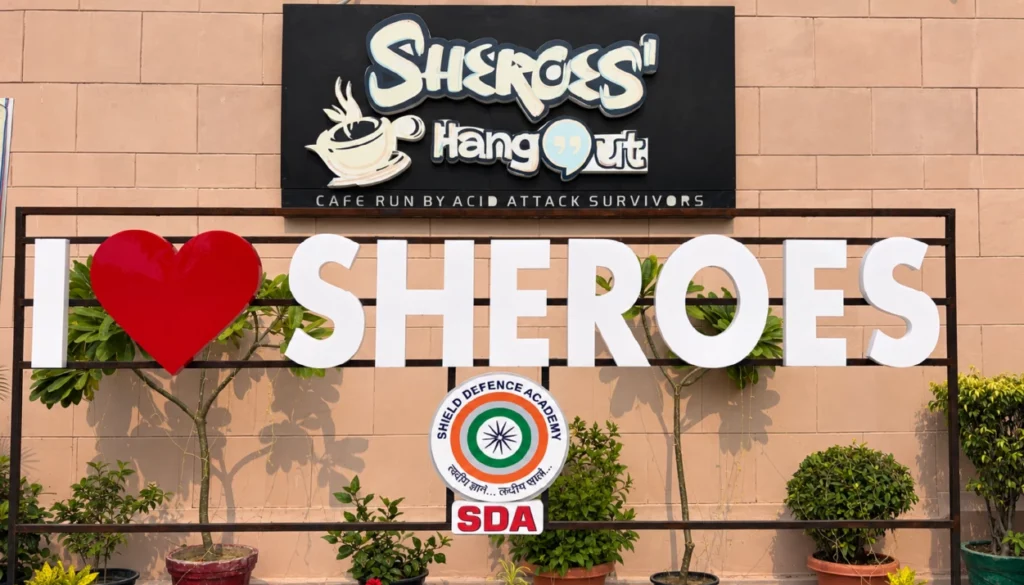
Yet the study is clear: while transformative, NGO support remains limited in reach and cannot replace systemic solutions.
Beyond Recovery: What Survivors Are Really Asking For
Recovery, for most acid attack survivors, is measured in surgeries completed and scars healed. But the qualitative study makes clear that survival is not the same as rebuilding a life. When asked what they truly wanted going forward, survivors didn’t speak in terms of sympathy or one-time relief. They spoke of three things: structure, dignity, and empowerment.
Structure meant a stable, predictable life again, a livelihood they could count on, support systems that didn’t disappear after the headlines faded, and a future defined by more than just getting through the day.
Dignity meant being seen as a whole person, not reduced to the attack that happened to them. Survivors wanted acceptance without pity, respect without hesitation, and freedom from the stigma that so often followed them into hospitals, workplaces, and even their own homes.
Empowerment meant agency, or the ability to make their own choices, earn independently, and have a real voice in decisions about their own future, rather than being spoken for or decided upon by families, institutions, or the system.
Taken together, these three needs reframe what “support” should actually mean. It isn’t just about compensation cheques or completed treatment protocols but whether a survivor can walk back into the world as herself, on her own terms. Chhanv’s work through employment, community, and visibility initiatives like Sheroes Hangout shows what happens when that shift is made possible. But as the study underscores, one NGO’s reach can only go so far; structure, dignity, and empowerment need to become the default the system delivers, not the exception a survivor gets lucky enough to find.
Building Chhanv’s Next Chapter
The research made one thing clear – isolated acts of heroism cannot substitute for a system. Based on these findings, four shifts can help Chhanv move from crisis response to lifelong rehabilitation infrastructure.
- Turn survivors into trainers. A survivor mentorship program that certifies survivors as first-aid and rights trainers, building a peer-led network that guides new survivors through recovery.
- Go beyond the North and East. Expand Chhanv’s footprint pan-India so rural survivors aren’t left without access to support.
- Scale Sheroes as a one-stop model. Grow the Sheroes Café/store format nationally — combining rehabilitation, livelihood, and a retail channel for survivors’ own work.
- Take the message to the ground. Use local theatre, nukkad natak, and traditional media to build hyperlocal awareness in rural communities.
Together, these point to one larger recommendation: a mass public awareness campaign on the scale of the Polio drive, one that shifts public apathy into action through authoritative, culturally rooted messaging.
This award-winning study showcases Borderless Access’ ability to conduct impact-driven, socially responsible research that combines methodological rigor with deep human understanding. It equips policymakers, NGOs, and institutions with a clearer understanding of where interventions break down and where meaningful change can begin.
By partnering with community organizations, designing ethical fieldwork, and translating lived experience into structured insight, Borderless Access is more than willing to demonstrate how research can inform dialogue, influence systems, and amplify voices that deserve to be heard.
This is not just about research. It is research that matters.