

Market research for Gen Alpha is all about understanding the attitudes, behaviors, preferences and emerging needs of people born into the youngest generation of consumers. That understanding goes beyond simply finding young people.
It means knowing whether you are hearing from the right young people, in the right context and in a way that reflects how they actually live.
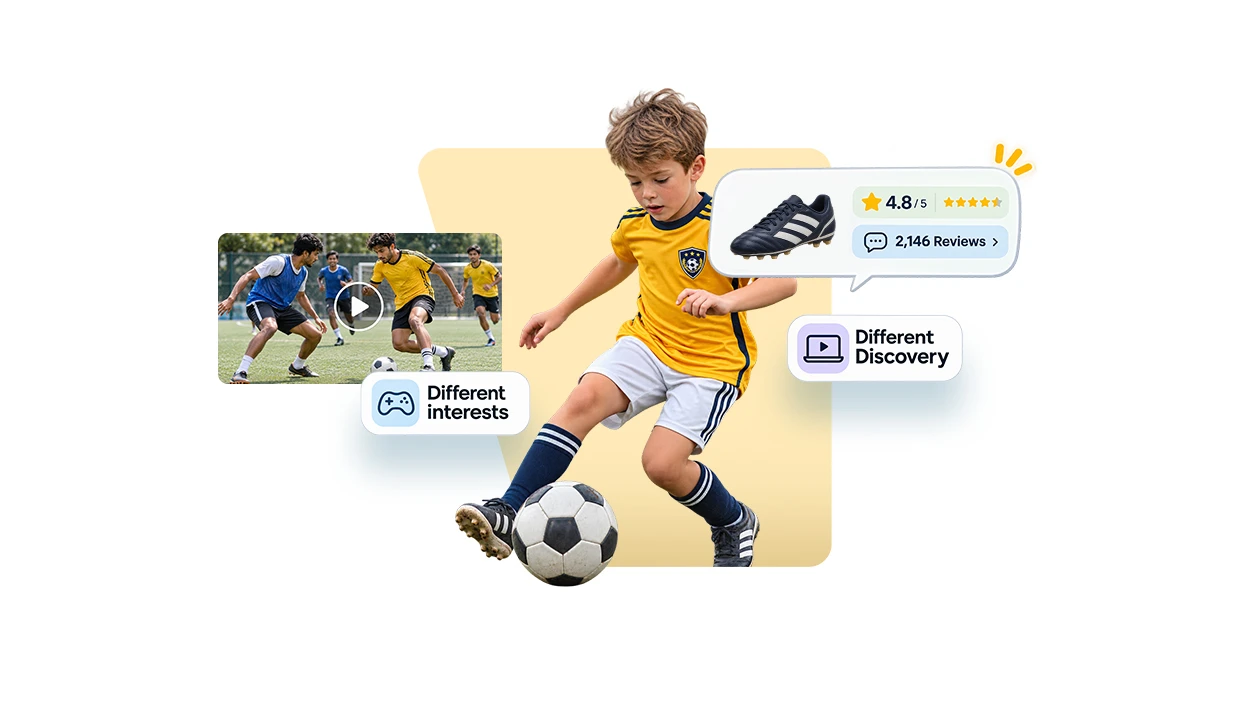
A 9-year-old gamer, a 12-year-old skincare enthusiast and a 15-year-old using AI to research purchases may all be grouped under ‘Gen Alpha’. However, they are three very different audiences from a research perspective.
This makes Gen Alpha particularly challenging to research, especially when traditional methods may not capture how younger audiences discover, interact with and respond to brands. So, what does it take to gather meaningful insights from this generation? Let’s find that out in this guide!
Gen Alpha: Knowing Your Audience and What Makes Them Different

Most Gen Alphas have grown up with smartphones, streaming platforms, online games, social platforms and AI-enabled experiences. Digital interaction is not a separate part of their lives.
However, growing up in a digital-first world does not mean every Gen Alpha has the same level of access or experience. According to UNICEF’s 2025 Childhood in a Digital World report, 1.3 billion children aged 3 to 17 do not have internet access at home. This is an important reminder for market researchers.
This means that some groups might not be represented in online-only research. Researchers should consider factors such as device access, connectivity, geography, and household circumstances.
Gen Alpha’s relationship with brands is also changing. A child may discover a product through a creator, they may discuss it with friends, see it in a game and then influence a household purchase.
As a market researcher, you need to understand both what Gen Alpha says and the cultural, social, and digital contexts that shape those responses.
Understanding the Gen Alpha Audience Beyond Their Age
There is another layer to understanding Gen Alpha that market researchers cannot overlook. This is treating behaviours seen among a certain age group today as definitive characteristics of the entire generation.
What looks like a Gen Alpha trait may, in some cases, simply reflect where a child is in their development or the environment they currently grow up in. This is why age alone may not be enough when building a research audience.
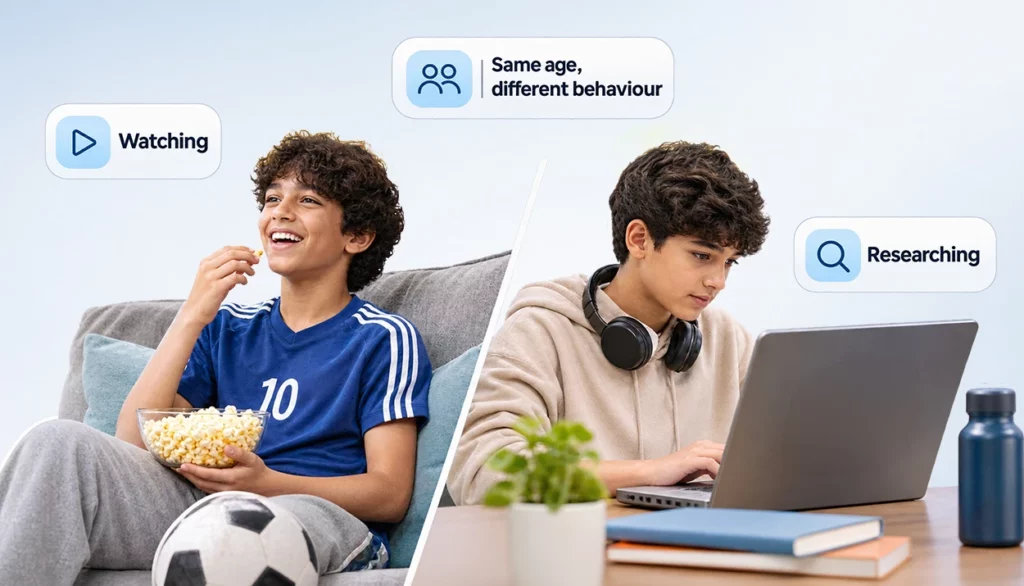
For example, two 12-year-olds may both love football, but one may only watch matches with their family, while the other may follow players, compare sports gear online and influence which products their parents buy for them. They are the same age, but they bring very different insights to research on sports consumption.
This is where profiling becomes important. Rather than treating everyone within an age bracket as the same audience, useful research may need to distinguish their audience among the following factors:
- Life Stage: Is the respondent a child or an older teenager?
- Autonomy: Do they discover, choose or pay for a product?
- Digital Environment: Do they spend more time on gaming, video, social platforms, streaming or AI tools?
- Household Context: What role do parental rules play?
- Category Relationship: Are they a direct user or an influencer?
What Makes the Gen Alpha Audience Hard to Reach?
Gen Alpha presents practical and behavioral barriers that can affect recruitment, engagement and representation. Here is a detailed understanding of why the Gen Alpha audience is hard to reach:
1. Participation Barriers
Age creates an immediate challenge in market research for Gen Alpha. As a market researcher, you need to consider that younger participants may require parental involvement.
For instance, a child may be the one choosing which game they want to play, while a parent controls the subscription or spending. Researching only the child may leave out the person making the final purchase decision, while researching only the parent may overlook what is actually driving the child’s demand.
2. Professional Scarcity
Gen Alpha is not a conventional professional or adult consumer audience. Many of them are students, so traditional professional profiling variables have limited value. As a researcher, you need to use variables such as school stage, household structure, device ownership, gaming behaviour, media environment, hobbies, creator affinity, category participation, parental controls and purchase influence.
3. Asymmetrical Engagement
Long surveys can quickly lose attention. A research experience that feels repetitive or overly formal may result in drop-offs or low-quality responses.
4. Trusting Peers Over Brands
Social circles, creators, communities, and online culture influence Gen Alpha’s opinions. For example, a direct message from brands may not carry the same weight as a recommendation from someone they relate to.
Why Traditional Online Consumer Panels May Not Be Effective for Gen Alpha?
If you are approaching traditional online consumer panels, then you may struggle with Gen Alpha. The reason is that representation and research design all require greater precision. A broad panel may contain enough respondents by age. That does not automatically mean it can deliver the right participants for a specific study.
A panel can contain thousands of children in a given age range and still fail the research objective if the audience has not been sufficiently profiled.
For example, a researcher studying gaming behavior may need participants who play specific genres or use particular devices. At the same time, a study on children’s food choices may require input from both children and parents.
If the research does not reach the right Gen Alpha audience, brands may draw inaccurate conclusions that affect product design, media planning, packaging, gaming strategies, creator partnerships and household messaging.
What Research Methods Work Better for Engaging Gen Alpha?
If you are running effective market research for Gen Alpha, you need to combine precise audience outreach with short, contextual and age-appropriate research experiences. Let us discuss the methods in detail:
- Niche Outreach: Recruit participants based on relevant characteristics, such as gaming frequency, content consumption, product usage and device ownership.
- Communicating with Context: Frame research questions around familiar situations and actual usage patterns to make them relevant to Gen Alpha.
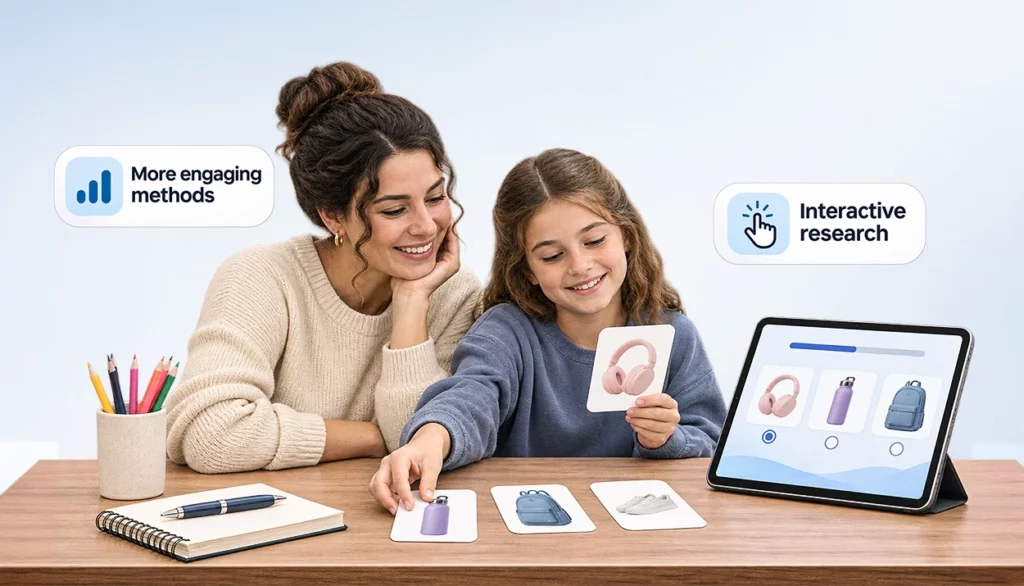
- Active Interaction: Use interactive methods such as visual choices, concept reactions, ranking exercises, short diaries and guided discussions to maintain engagement.
- Age-Appropriate Design: Consider age-appropriate language, consent, privacy, incentives, accessibility and parental or guardian involvement when researching minors.
- Short-Form Research: The goal is not simply to make research shorter. Instead, you need to remove questions that do not contribute to the decision.
When you combine these methods together, you can build a more accurate picture of the Gen Alpha market. You can identify emerging Gen Alpha trends without relying solely on broad assumptions.
How Borderless Access Combines the Right Panel with the Right Methodology?
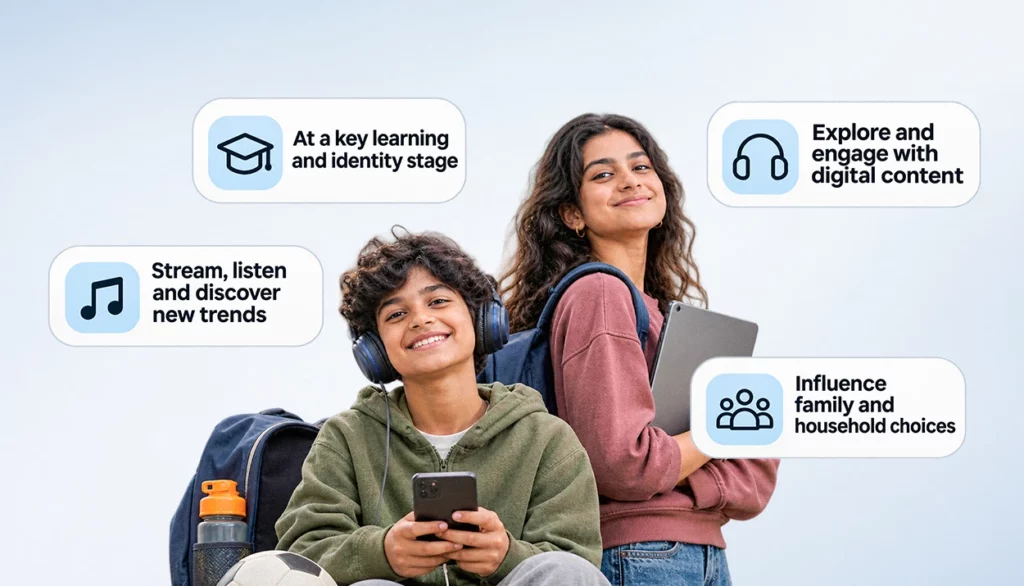
If your goal is to reach Gen Alpha, then you need two things: finding the right participants and understanding their real behavior. At Borderless Access, we combine hyper-niche consumer panels with qualitative research to address both of these factors.
Our hyper-niche panels help you identify specific audiences based on detailed demographic, behavioral, lifestyle and interest profiles. This can help you move beyond broad age groups and reach relevant, hard-to-reach Gen Alpha audiences.
However, recruitment is only the first step. As a researcher, you also need to understand the reasons behind responses. At Borderless Access, we use qualitative approaches such as conversational AI probing, in-depth interviews, focus groups, ethnography and observational research to explore deeper motivations and behaviors.
We use QMan™, which is our AI-powered quality control framework. It includes checks such as digital fingerprinting, geolocation and VPN validation, attention checks, duplicate removal and behavioural scoring.
This helps filter fraudulent or low-quality respondents so the research reflects genuine opinions from real people. Together, these approaches can create a more complete research journey, which involves:
- Finding the relevant audience
- Creating an engaging research experience
- Protecting research quality
- Understanding the behaviour behind the response
This creates a dual advantage for you: reach them first and reach them honestly.
Turning Gen Alpha Research Into Actionable Insights

Gen Alpha is not a single, uniform consumer group. Their behaviours can differ based on age, life stage, digital habits, household environment, interests and level of influence over purchasing decisions.
That makes precision particularly important when you conduct market research for Gen Alpha. The right research approach brings together precise audience definition, relevant participation methods and deeper behavioural understanding.
When these elements work together, brands can move from assumptions about Gen Alpha and build a clearer picture of what drives their choices.
Frequently Asked Questions
1. Why is market research for Gen Alpha difficult?
The reason why Gen Alpha is hard to reach is because of age restrictions, parental involvement, privacy requirements, fragmented digital behavior and short attention spans.
2. What is market research for Gen Alpha?
Market research for Gen Alpha refers to the preferences, behaviors, motivations, media habits, and emerging needs of this generation. This helps brands make informed decisions.
3. What defines a hard-to-reach audience in market research?
A hard-to-reach audience means respondents who are difficult to access through standard consumer panels. For example, hard-to-reach audiences can include specialized professionals, rare-condition patients, senior decision-makers or niche groups.
4. Which market research methods work well for Gen Alpha?
You can use research methods such as short surveys, interactive research, digital ethnography, concept testing, behavioral tasks and qualitative research. These methods can provide you with stronger engagement.
5. Why is qualitative research important for Gen Alpha?
If you use qualitative research, it helps you understand the motivations, emotions, social influences, and experiences behind Gen Alpha’s stated preferences and behaviors.