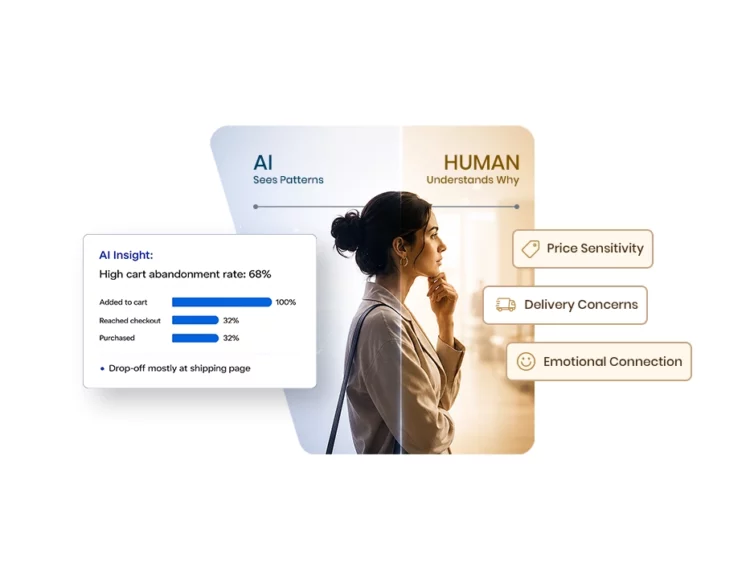


Ask someone why they switched their moisturizer and they’ll probably say, it stopped working. But that’s never the complete story. More often, it may be a comment someone made, an ad they saw online with great results, or a quiet dissatisfaction they couldn’t quite name, often planted by an influencer’s recommendation that made their current routine feel suddenly inadequate.
When influencer marketing first took hold, it addressed honesty and transparency in beauty, something consumers wanted for a long time. Less production, less perfection, more real opinion. Brands that leaned into it early saw the trust translate directly into purchase behavior.
However, with the popularity of influencer marketing, came the ‘want’ for better follower counts, platform reach, and share of voice. It was simple math. If a creator had the numbers, they got the deal. A simple logic, except it ignored something important: a creator with two million general lifestyle followers and a creator with forty thousand devoted beauty fans are not the same asset.
One gives you reach. The other gives you influence. Brands spent years, and serious money, treating those two things as interchangeable. And while that gap has become harder to ignore, the bigger issue is what it’s revealed. The fact that follower counts and campaign reach say very little about what consumers actually think, feel, or need, understanding that requires a different approach entirely.
The Hidden Layer: Emotional Contradictions Behind Every Purchase
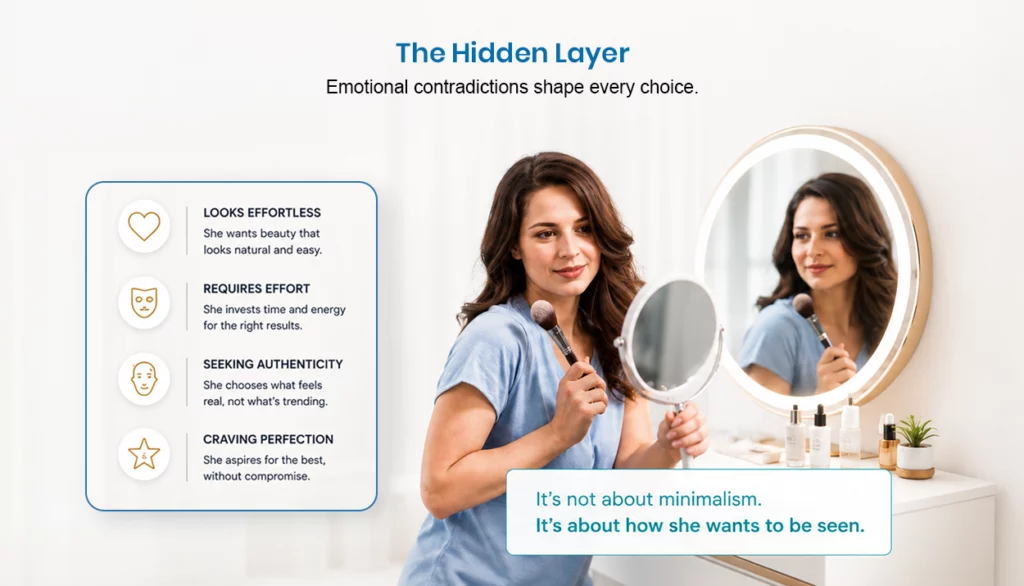
Few trends in beauty and personal care reveal the gap between what consumers say they want and what they actually act on, quite like the “no-makeup makeup” look. It’s built on the idea of effortlessness: natural, low-key, real. It also, in practice, involves a fairly involved routine, several products working together, and enough skill to make all of it invisible. Consumers are fully aware of this on some level. They do it anyway.
Because the look was never really about minimalism. It was about looking like someone who has it together without the vulnerability of being seen trying. Now, you won’t find that in a report. Will you?
This is exactly why understanding emotional contradictions in beauty and personal care isn’t optional. Consumer preferences in this space are deeply dynamic. What feels appealing today, whether it’s a skincare formula, a fragrance, packaging, or even a brand’s tone of voice, can shift quickly based on social influence, cultural moments, and how someone feels about themselves that season.
Purchase decisions run on confidence, insecurity, belonging, and aspiration, often all at once. A qualitative research survey designed to explore those undercurrents will get closer to the truth in a single session than months of behavioral data.
Every year, beauty and personal care brands collectively spend billions developing, testing, and launching products that consumers don’t buy. Not because the products are bad. Not because the research was poorly designed. But because the concepts were evaluated against the wrong cultural codes, in the wrong emotional register, using tools that were built to measure consumer reaction rather than decode consumer meaning.
What Consumers Show You When You Stop Asking and Start Observing
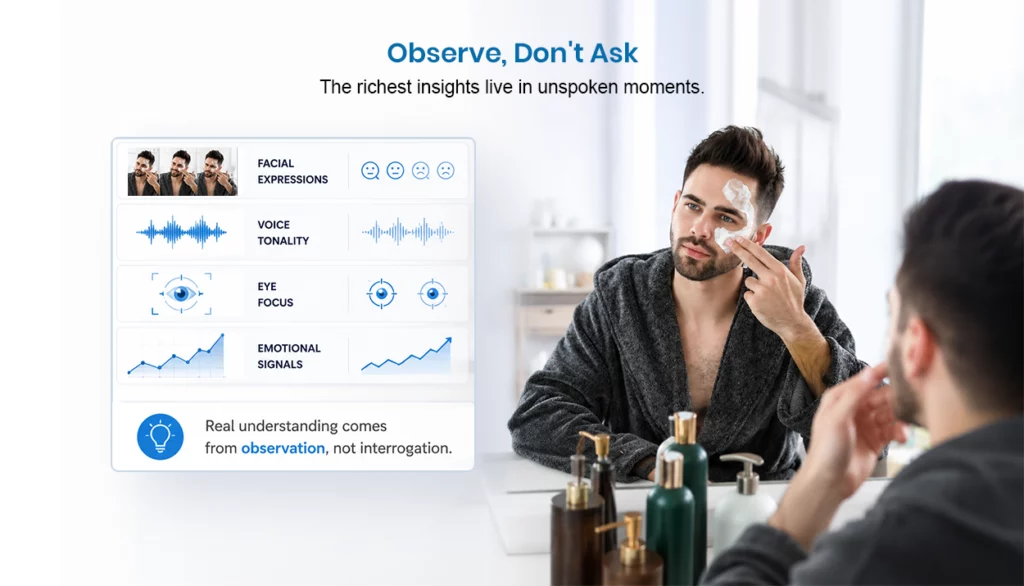
One of the most underappreciated sources of cultural intelligence in beauty research is not what consumers say in a survey. It is what their faces do, what their voices carry, and what they reach for when they think nobody is paying close attention.
A consumer who describes a skincare routine with genuine warmth, whose expression registers calm satisfaction while her voice carries a kind of quiet pride, is telling you something about the emotional register that product needs to inhabit. That information is not available in a rating scale. It is not available in an aided recall score. It lives in the qualitative texture of the human response, and it requires tools sophisticated enough to capture it.
Facial coding, voice tonality analysis, and emotion tracking are beginning to change what is possible in this space. When deployed across diverse consumer groups in different markets, they reveal something that quantitative research consistently misses: the emotional signature of a concept.
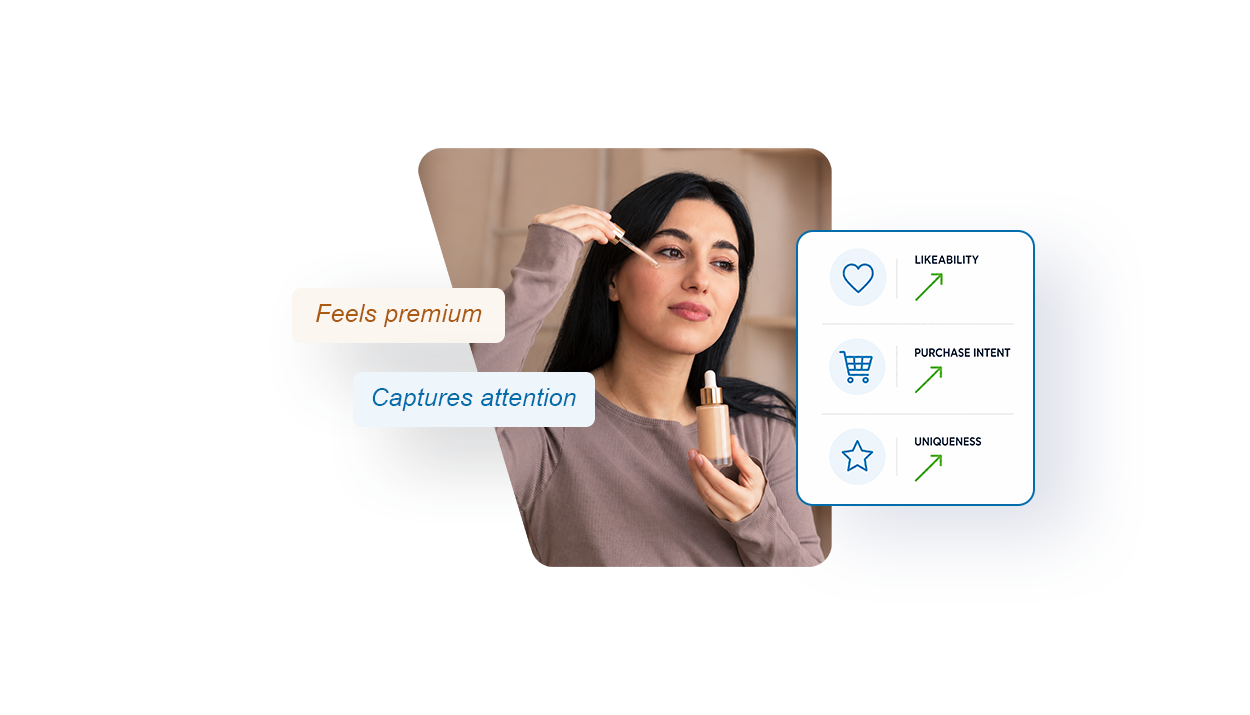
Two concepts can score identically on likeability but produce entirely different emotional responses, and that difference is often the most predictive variable in determining which one will build lasting brand equity.
The brands that are incorporating these tools into their concept testing process are discovering something important: consumers across all markets are more emotionally articulate than survey instruments allow them to be.
Adopting a Smarter Approach to Concept Testing
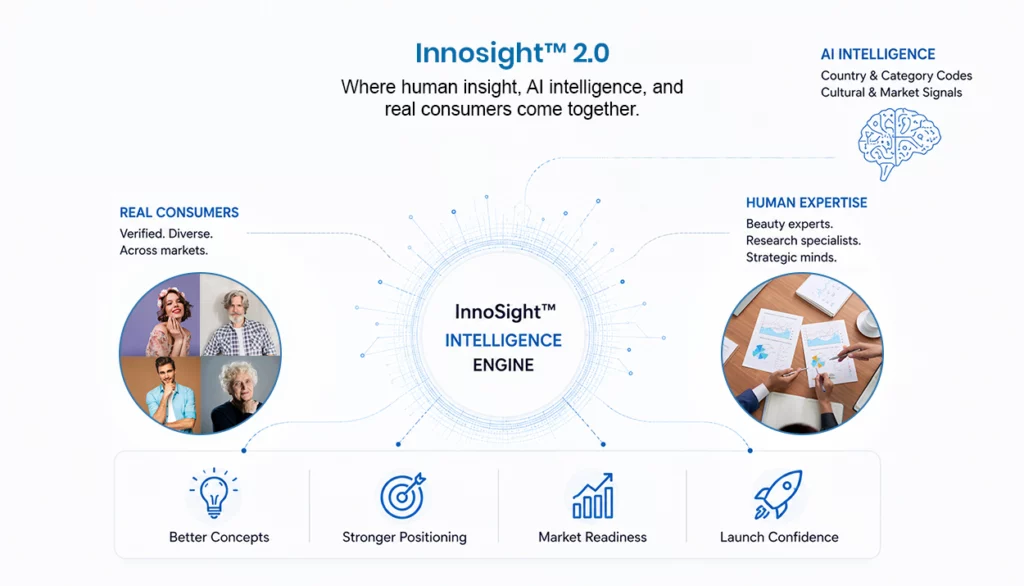
Most concept testing tools are built to answer one question: does this work? InnoSight 2.0 is built to answer a harder one: how do we make this win? For beauty and personal care brands operating across multiple markets, a tool that tells you why a particular concept achieved a certain score, or which specific elements of the concept are limiting its appeal in this market, and what an improved version would look like, is transformative.
InnoSight 2.0 is that tool.
Primary Consumer Research forms the foundation. Real consumers, from verified, well-profiled panels across target markets, evaluate concepts across the dimensions that actually predict market performance: likeability, uniqueness, benefit relevance, purchase intent, message clarity, and brand fit. This is structured primary research, not social listening or proxy data, and it captures the direct voice of the consumer in the market you are entering.
AI-Captured Country and Category Codes address this gap directly. InnoSight 2.0 draws on digital platform intelligence to understand what codes are driving engagement in the beauty and personal care category right now, in each specific market. What visual language is getting quick attention, which claim structures are building trust, which aesthetics feel current and which feel dated. This is captured from the platforms where consumers are actively expressing their preferences and making their judgments.
When this layer is integrated with primary research findings, the picture changes significantly. A brand can now see not just that a concept is underperforming on uniqueness in a specific market, but that the visual codes it is using are category-conventional in that market and that the codes currently driving distinctiveness look quite different.
Human Intelligence is the third layer, and in many ways the most important one. AI can identify patterns. It cannot tell you what they mean for your brand strategy, or what the right response to them is. InnoSight 2.0 pairs its automated intelligence with insights experts who drive the interpretation, the recommendations, and the actions. These are professionals who understand both the research and the category, who can translate findings into decisions, and who ensure that the intelligence generated is always in service of a concrete commercial outcome.
For beauty and personal care brands, the difference between a successful launch and a missed opportunity often comes down to understanding why consumers respond to a concept, not just whether they like it. InnoSight 2.0 helps brands move beyond traditional concept testing by combining consumer feedback, category intelligence, AI-powered analysis, and human expertise into a single decision-making framework.
Whether evaluating new product ideas, testing claims and packaging, refining brand messaging, or assessing market readiness across regions, InnoSight 2.0 helps brands identify what drives consumer appeal, where concepts are falling short, and how they can be strengthened before launch.
Uncovering the emotional, cultural, and category-specific factors that shape consumer preferences, brands can reduce development risk, accelerate innovation, and bring products to market with greater confidence.
At ESOMAR Africa 2026, Borderless Access showcased how InnoSight 2.0 helped a leading consumer brand navigate one of the biggest challenges in emerging markets: balancing global scale with local relevance. By combining primary consumer research, AI-captured country and category codes, and expert human interpretation, the brand was able to evaluate concepts through the lens of local culture, consumer expectations, and market-specific realities.
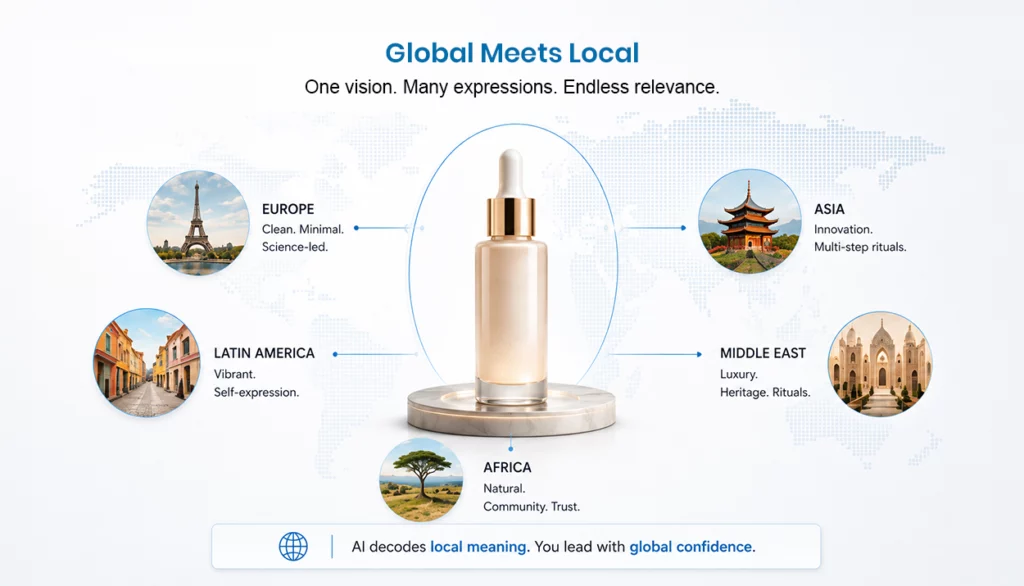
The result was a more informed approach to product development that reduced guesswork, strengthened relevance, and improved readiness for product launch.
Download our ESOMAR Africa 2026 ebook to know how we are helping leading brands combine AI and human intelligence to test and build products that resonate across diverse markets.
The Path Forward
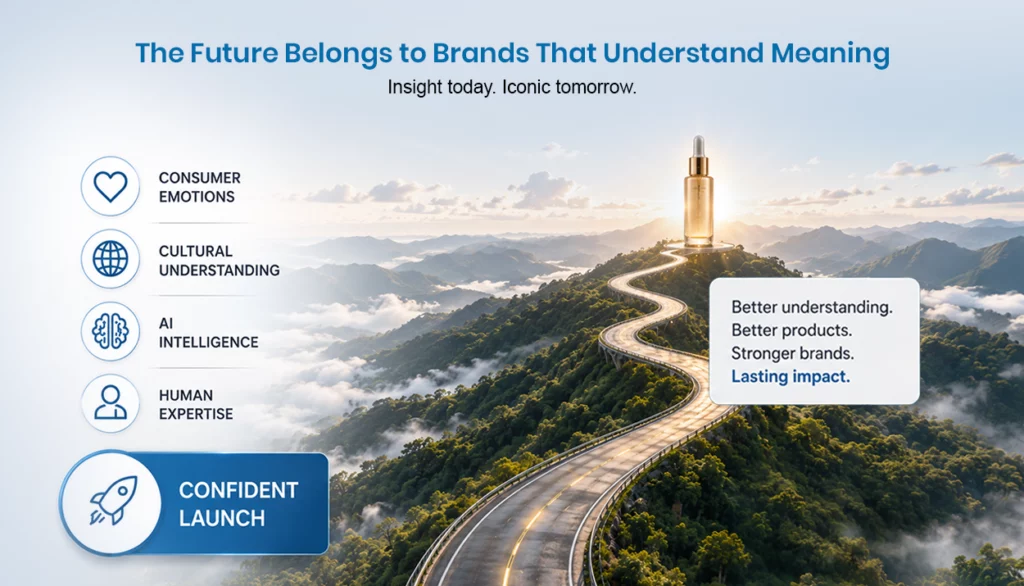
Beauty brands have always understood, at least intuitively, that consumers buy meaning as much as they buy products. The industry’s most enduring brands are built not on superior formulations but on superior emotional intelligence: a deep, continuously refreshed understanding of what their consumers care about, how they see themselves, and what role the brand plays in that story.
The research infrastructure that supports that intelligence has not always kept pace with ambition. Standard concept testing tells you whether a concept passes. It rarely tells you how to make it exceptional. And in a category where the difference between a product that earns loyalty and one that earns a single trial is almost always emotional rather than functional; that gap between passing and exceptional is where most of the commercial value lives.
The brands that close that gap, that invest in concept intelligence rather than just concept evaluation are the ones that will define beauty across global markets in the next decade. The tools now exist to do this at speed and at scale. The question is which brands will use them first.
To learn more about AI-integrated concept testing and development platform can support your next launch, speak to our experts today.