

Most marketing budgets get spent chasing reach, frequency and channel mix, long before anyone asks whether that spend is aimed at the right consumers. Brand equity research exists to answer that upstream question: which segments are worth the investment, and why. Marketing directors who treat media as the starting point are optimizing execution before diagnosing the problem. The ones who get real returns start earlier: they use brand equity research to understand what actually needs to change before deciding where to spend.
Why Media Plans Fail Without Brand Equity Research
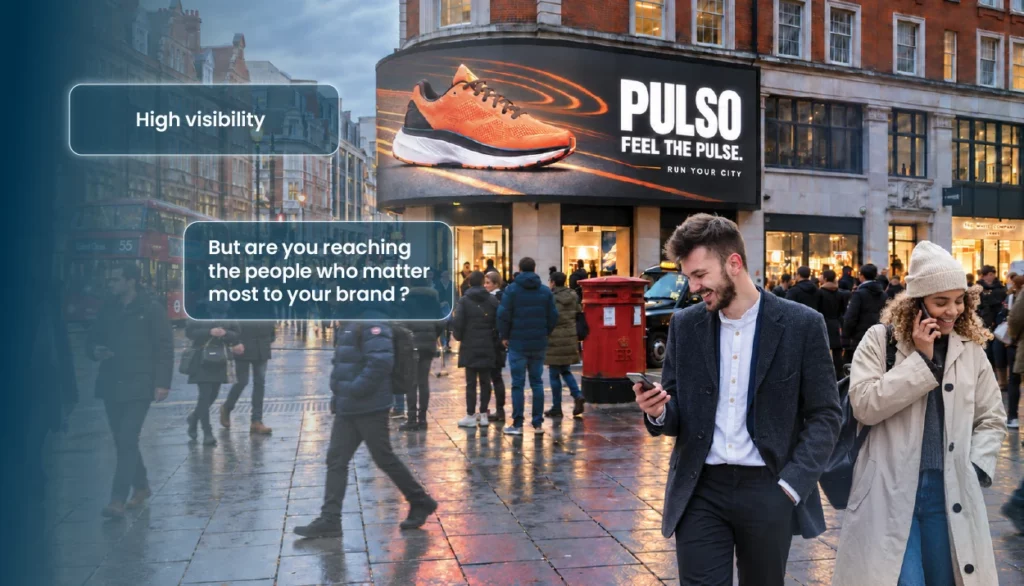
Media plans can fail quietly. The campaign runs, the numbers get reported, and nobody questions whether the underlying brand problem was ever addressed. A brand with strong awareness but weak preference does not need more reach; it needs a sharper answer to why it should be chosen. A brand with strong trust but low recommendation does not need louder advertising; it needs a better reason to be talked about.
Media decisions made without this context tend to optimize the wrong variable, delivering impressions against a problem the campaign was never built to solve. Brand equity research does not replace media planning. It defines what the media is actually supposed to accomplish.
What Is Brand Equity, and Why Does It Matter?
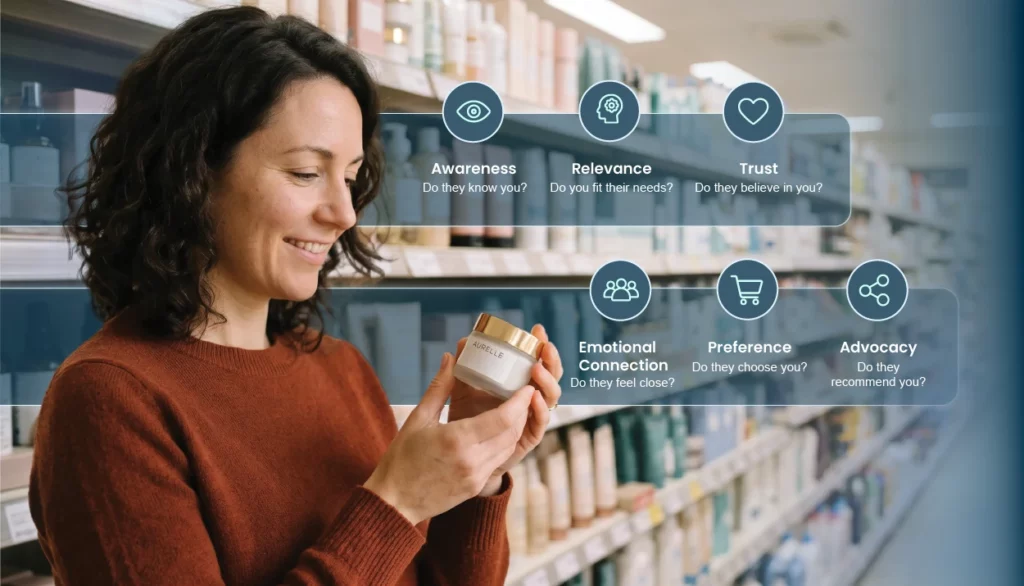
Brand equity is easy to confuse with awareness and recognition, but it measures something else. Awareness tells you whether a name registers. Equity lives in the accumulated relationship: perceived trust, relevance, emotional connection, preference, and the willingness to recommend. Awareness builds an audience. Equity builds a customer base that keeps choosing you when a cheaper or louder alternative shows up. That difference, between being known and being meaningfully chosen, sits at the center of ongoing research distinguishing brand affinity from brand awareness, and it is the one most tracking programs still fail to measure with any precision.
Question 1: Do Consumers Know Your Brand, and What Do They Actually Think It Stands For?

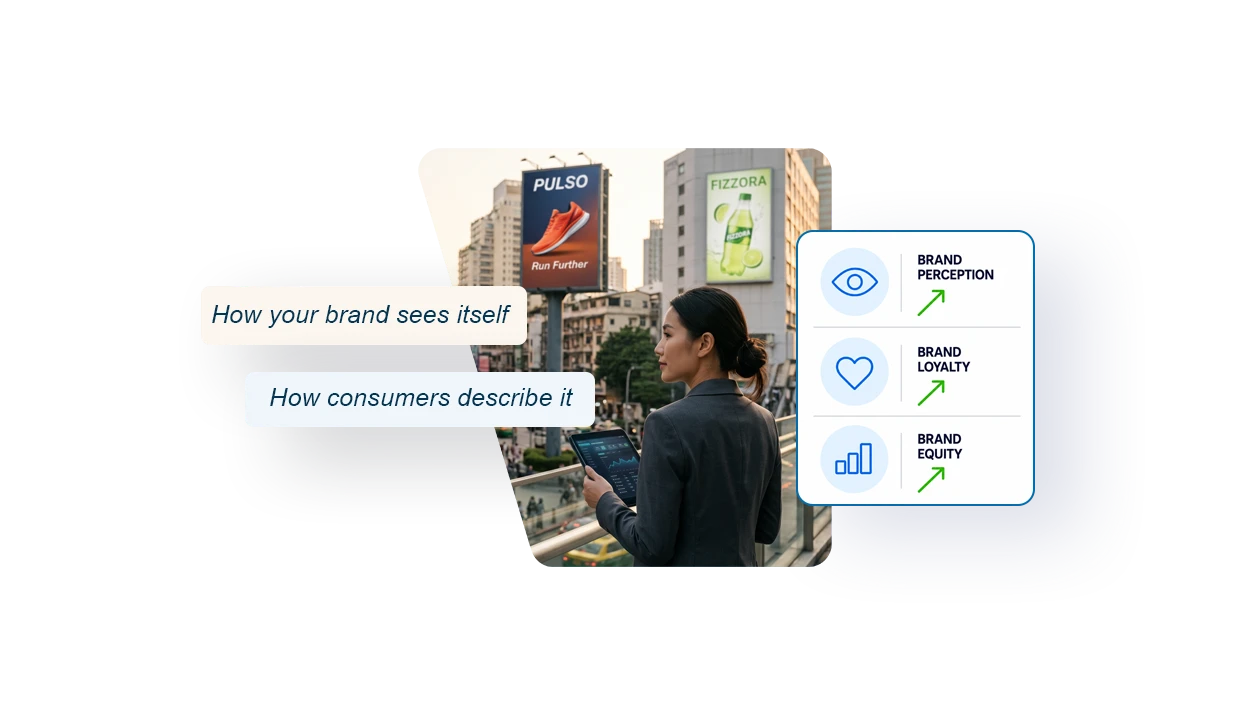
Aided and unaided awareness are useful starting metrics, but they answer a narrow question: has this name registered? They say nothing about whether that recognition converts into preference, loyalty or advocacy. A brand can top the unaided awareness charts in its category and still lose share to a smaller competitor with a sharper relationship. Every brand has an intended position and an actual one, and the gap between them is usually wider than strategy decks assume. Brand equity research is what surfaces that gap: functional perceptions, emotional associations, trust and perceived value. A positioning deck might describe the brand as innovative while consumers describe it as reliable but dated, and media spent amplifying that word then works against what people already believe. The uncomfortable question worth asking is simple. If consumers describe the brand differently than the strategy does, which version should the next campaign amplify?.
Question 2: Is Your Brand Preferred When the Decision Actually Gets Made?
Knowing and choosing are different acts, and a lot of media spend assumes they are the same. A brand can sit at the top of awareness rankings and still lose the moment that matters, the point where a consumer compares two or three options and picks one. Consideration, preference and purchase intent sit between recognition and revenue, and a weakening in any of them stays invisible if the only metric being tracked is awareness. When preference softens while awareness holds steady, more reach will not close the gap. The media has to work on the decision, not the recall.
Question 3: How Does Your Brand Compare with the Competitors Consumers Actually Consider?
Most competitive sets are defined internally, by category, by price point, by whoever shows up in the quarterly business review. Consumers define theirs differently, often more narrowly or more broadly than the brand expects. A regional bank might assume it competes with the other national players, while its actual switching risk comes from two neighborhood challengers nobody put on the slide. Ongoing competitive benchmarking, run as part of brand equity research rather than an annual exercise, surfaces perception gaps and white space that can shift a campaign entirely: where to spend, what to say, which audience deserves priority. The competitive set worth studying is the one the consumer already carries in their head.
Question 4: What Does Your Brand Stand For in Consumers’ Minds?

A single research wave tells you where the brand stands today. Only tracking tells you whether it is moving, and in which direction. This matters because a heavy media burst can lift awareness and consideration temporarily without the underlying relationship strengthening at all. The brand looks healthier because it is louder. That says nothing about whether more people trust it or would recommend it. The real test is whether the improvement survives once media pressure eases. Consistent, comparable benchmarks over time are the only way to tell a genuine equity gain from a campaign-shaped mirage, and that is the argument for brand equity tracking over one-off snapshots.
Question 5: Which Consumer Segments Are Driving, or Weakening, Your Brand Equity?
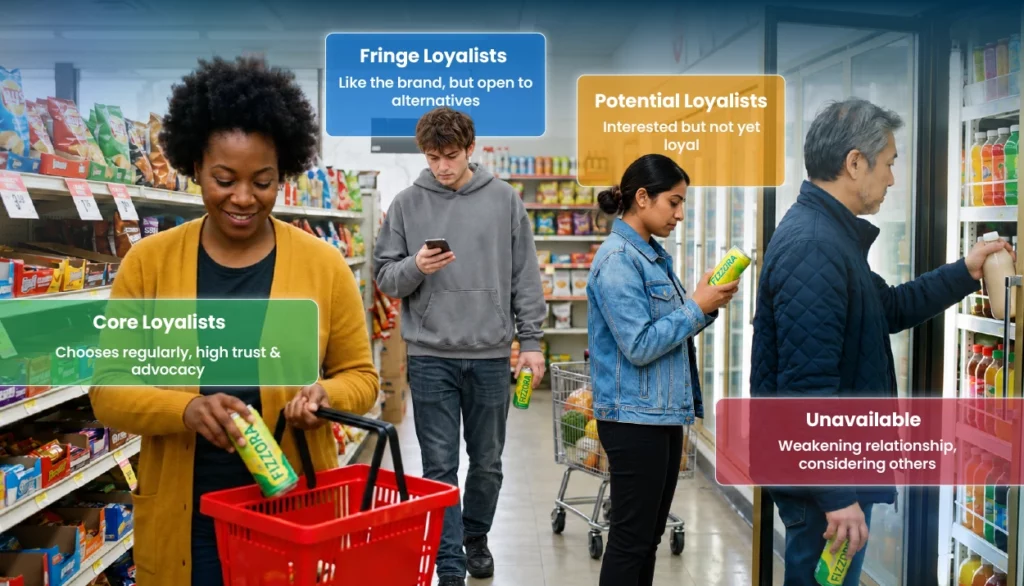
Aggregate brand scores can look stable while individual relationships move in opposite directions underneath them. Demographic segmentation rarely catches this: two consumers can sit at exactly the same point in the funnel and still represent completely different opportunities. One may be loyal by conviction, the other by habit and switching cost. One may be close to deepening the relationship, the other quietly drifting toward a competitor. A retail banking study Borderless Access ran in Saudi Arabia found that 68% of customers sought a major bank’s services in some way, while only 44% were emotionally committed, a 24-point Fringe gap representing real growth opportunity hiding inside an apparently healthy topline number. Core, Fringe and Potential loyalists in that study wanted different things too, from purpose and inspiration to fraud protection to seamless onboarding, which is exactly why one message rarely serves all of them.
Explore our Global Retail Banking Study to see how major banking and financial services organizations worldwide can identify hidden loyalty gaps, understand high-potential consumer segments and build a stronger and long-term brand equity.
Question 6: Are You Measuring What Actually Moves Media ROI?
Not every brand metric earns its place in a boardroom deck. Some are easy to report and change little about how money gets spent; others meaningfully connect to business outcomes and deserve to sit next to revenue and share. Effective Brand Equity Measurement links perception data to consumer response, campaign performance and purchase behavior, so a shift in a tracking score can be traced to a shift in something the business actually cares about. The right question is whether it moved something commercial, conversion, retention, price tolerance, share of category spend. If a metric cannot answer that, it belongs in an appendix, not a media brief.
Turning the Diagnosis Into Smarter Media Decisions
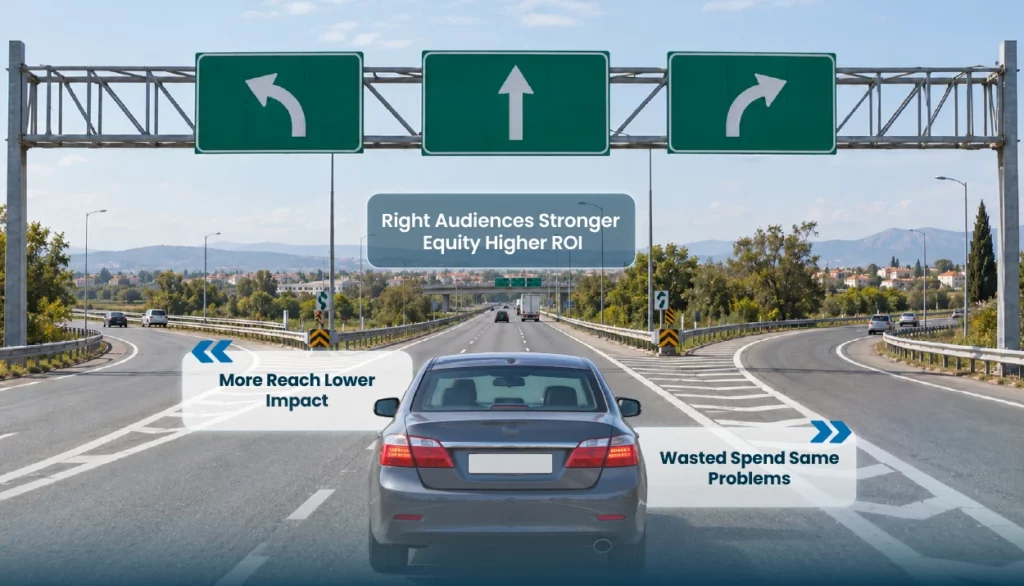
Sometimes the diagnosis points outside marketing entirely. The same Saudi banking study found that brand trust alone did not explain loyalty: operational realities such as 24/7 support, branch accessibility and transaction fees also shaped whether that trust translated into customer behavior, realities no amount of media spend can fix. Where the problem genuinely is media, findings should change concrete decisions: which channel earns the budget and which audience gets priority. This is where brand health tracking becomes a feedback loop rather than a report card. It runs before a campaign to define the objective, during it to catch drift early, and after it to confirm whether the change actually held.
Explore how a luxury travel destination used continuous brand tracking across global markets to understand consumer awareness, strengthen brand positioning and refine its media strategy.
How Borderless Access Helps Brands Track and Strengthen Brand Equity
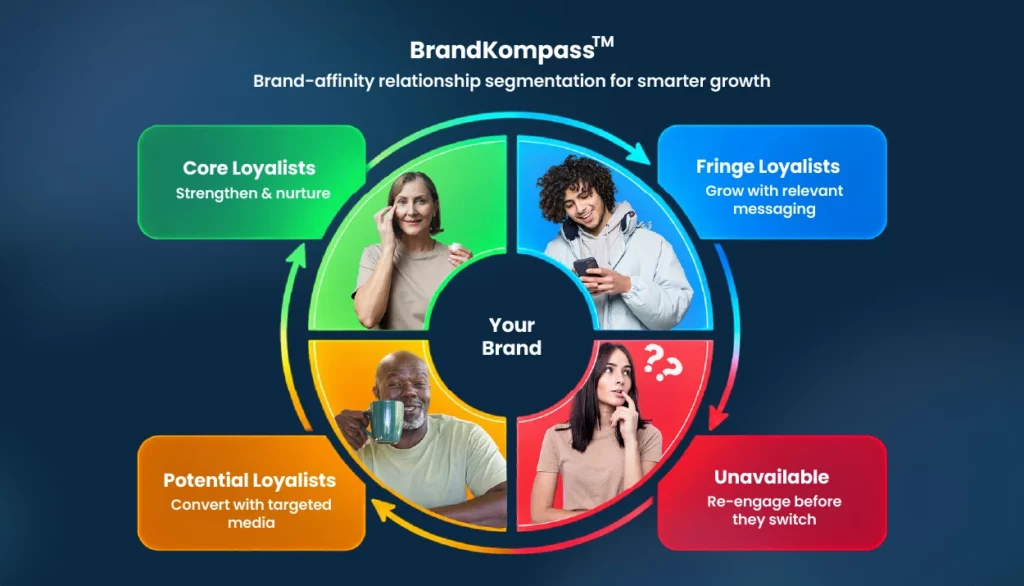
Brand Kompass is built around one mechanism: brand-affinity relationship segmentation, sorting consumers by depth of connection rather than demographics alone. Once a brand knows which segments carry the most untapped value, media investment can move toward them instead of spreading evenly, and that redirection is what reduces wasted spend. The same segmentation, applied over time, nurtures core loyalists differently from potential ones, and that sustained attention is what compounds into long-term brand equity rather than a single campaign’s lift. Run continuously, it lets a marketing team see these shifts as they happen instead of months later. Applied this way, brand equity research decides where budget moves next.
The Smartest Media Plan May Not Begin with Media at All
It begins with knowing what the brand actually means to the people who encounter it, who is genuinely committed and who merely recognizes the logo, where preference is quietly eroding, how the competitive picture looks from the consumer’s side, and which shift would actually move the business. Ask that first, and the media plan stops being a guess about where to spend, and starts being a plan for what to change.
Want to uncover the loyalty gaps, consumer segments and perception shifts shaping your brand? Discuss your brand equity research requirements with our research experts.
FAQs
Why should marketers measure brand equity before planning media campaigns?
Because media works on a brand condition that already exists. Spending against the wrong problem, like more reach when the issue is preference, wastes budget regardless of how well the campaign runs.
What are the key indicators of strong brand equity?
Awareness scores don’t tell you much on their own. What matters more is whether people prefer the brand at the point of decision, trust it, feel something for it, and would recommend it or stick with it when a competitor cuts price.
What is the difference between brand equity measurement and brand health tracking?
Brand Equity Measurement captures the depth and quality of the consumer relationship at a point in time. Brand health tracking follows that relationship over time, showing whether it is strengthening, flat or eroding.
How often should brands conduct a brand equity audit?
Frequency depends on category volatility, campaign cadence and competitive activity, but when conditions change faster than a research cycle, continuous tracking gives a more useful signal than a periodic one, particularly around major campaigns, product launches.
How does Brand Kompass help marketing teams monitor brand equity?
It segments consumers by relationship depth rather than demographics, tracks that segmentation continuously, and links it to media behavior and competitive position, turning brand equity research into decisions rather than reports.