
Oncology continues to advance at an extraordinary speed. Targeted therapies, biomarker-driven treatment pathways, and tech-enabled diagnostics are transforming care and offering fresh hope in one of medicine’s most complex fields.
Yet even the most innovative oncology breakthroughs face a familiar challenge: scientific excellence alone does not guarantee impact. True adoption requires clear communication, and a deep understanding of the information pathways that shape clinical innovations.
Treatment decisions emerge from the combined influence of oncologists, radiologists, pharmacists, nurses, payers, and caregivers. Understanding how each group learns, thinks, evaluates, and ultimately acts is essential for companies aiming to drive meaningful, clinically relevant commercial success.
Why Oncology Needs Integrated Insights More Than Ever
Cancer care is actually a system defined by multiple experts, each bringing distinct perspectives that shape treatment decisions.
- Oncologists weigh efficacy, safety, guidelines, and trial evidence.
- Radiologists influence diagnosis accuracy and early treatment direction.
- Pharmacists determine access feasibility, dosing practicality, and formulary readiness.
- Caregivers drive adherence, manage side effects, and support emotional resilience.
Healthcare panels bring these voices together, allowing brands to see the full picture—not just isolated fragments. This matters because oncology treatments succeed only when all stakeholders understand and support the therapy.
Insights from Borderless Access’ study on oncologists illustrate this clearly:
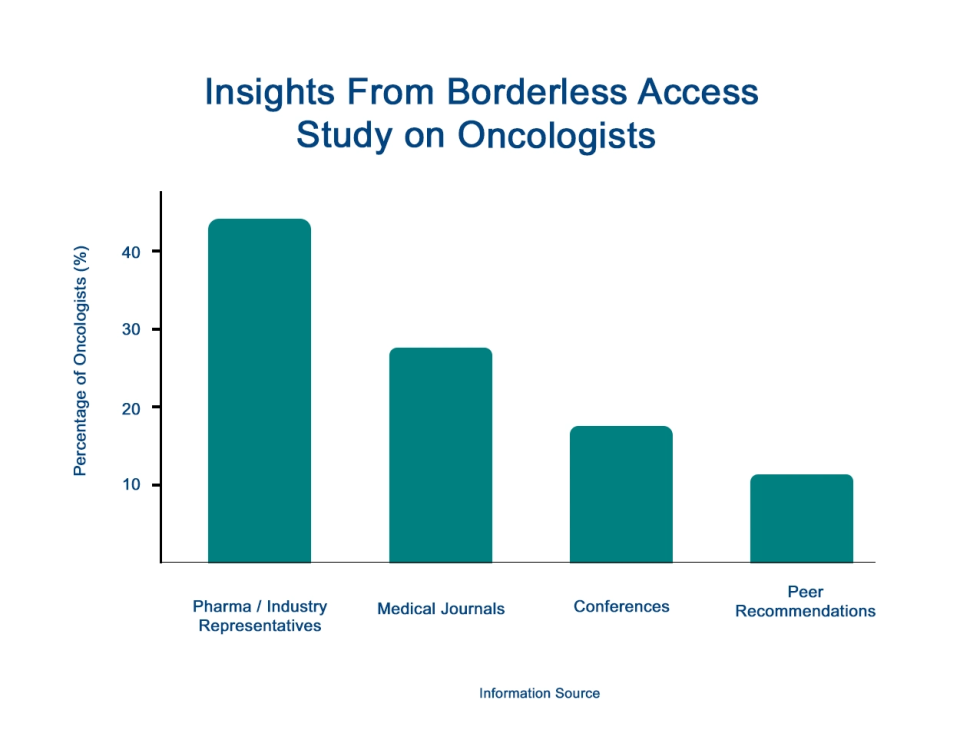
- 44.4% of oncologists first hear about new treatments from pharmaceutical or industry representatives, showing the critical role of structured, targeted engagement.
- Medical journals (27.8%) and conferences (16.7%) follow, signaling the need for credible omnichannel visibility.
- Only 11.1% rely on peer recommendations, highlighting oncology’s independent decision-making culture.
For commercial teams, this means awareness needs to be built through channels oncologists already trust. Healthcare panels help identify those channels clearly.
The Other Side of Oncology: Insights Beyond the Clinic
Oncology success depends not only on clinicians but also on patients and caregivers.
Panel insights show:
- 40% of oncologists prefer in-person consultations for patient education
- 33.3% rely on structured educational materials
- Caregivers influence adherence, emotional stability, and day-to-day treatment decisions
Healthcare panels bring these human insights into focus. They help identify emotional barriers, support gaps, comprehension issues, and behavioral patterns, all of which influence adherence and long-term outcomes.
How Borderless Access’ Healthcare Panels Enable Advancements in Oncology
Bringing any meaningful clinical breakthrough demands a deep, real-world understanding of how therapies are perceived, adopted, and supported across the healthcare ecosystem. This is where Borderless Access’ proprietary panels for healthcare market research play a decisive role, capturing genuine and reliable insights from every stakeholder who influences cancer care.
With access to over 875,000 physicians, 380,000 allied health professionals, and 1.25 million patients and caregivers across 39 global markets, Borderless Access brings unmatched scale and diversity to oncology research. These oncology panels include specialists across key oncology indications such as breast, lung, colorectal, hematologic cancers, melanoma, and rare oncology conditions, ensuring insights reflect real-world variation in practice, access, and patient experience.
This breadth allows pharma and medtech companies to understand how innovation is shaped at every stage of the oncology journey. Physician panels reveal how oncologists evaluate trial data, balance treatment efficacy with safety, and respond to evolving guidelines. Radiologists and diagnostic specialists provide insight into early detection, staging challenges, and imaging-driven decision points. Pharmacist panels uncover dosing complexities, and access considerations that often determine whether a therapy is used in practice. Patient and caregiver panels bring forward the lived experience of treatment, highlighting adherence challenges, quality-of-life concerns, and unmet support needs that influence outcomes beyond the clinic.
Bridging Innovation with Impact: The Role of Multi-Stakeholder Insights
In oncology, innovation is only half the journey. Impact comes from clarity, trust, and meaningful engagement. Multi-stakeholder healthcare panels help brands see beyond clinical data to understand the full human and operational context of treatment decisions.
By integrating insights and experiences of physicians, caregivers, pharmacists, and other allied healthcare professionals, oncology companies can craft strategies that are not only scientifically strong but emotionally resonant and commercially effective.
FAQs
Oncology treatment decisions involve multiple stakeholders, not just oncologists. Specialized healthcare panels bring together insights from physicians, radiologists, pharmacists, patients, and caregivers to reflect how cancer care actually works in the real world. This integrated view provided by healthcare panel providers help companies understand adoption barriers, access challenges, and patient needs more accurately, leading to better treatment strategies and outcomes.
Multi-stakeholder panels uncover the full treatment experience, from diagnosis and prescribing to access, adherence, and long-term care. By understanding how different stakeholders influence decisions and behavior, companies can design therapies, communication, and support programs that are clearer, more practical, and more patient-centric, ultimately improving adherence and outcomes
Panels connect clinical innovation with real human behavior. They help companies understand not just what works in trials, but what works in everyday practice, leading to better adoption and patient outcomes.
Caregivers play a major role in treatment adherence, emotional support, and daily decision-making. Including them provides insights that are often missed but critical to improving outcomes and quality of life.