


Why the next competitive advantage for brands will not be data richness, but learning richness?
Most organizations today are data rich. Far fewer are learning rich.
They have dashboards, analytics platforms, customer data, brand trackers, social listening tools, research archives and now, artificial intelligence tools. They have more information than any previous generation of business leaders.
Yet many still struggle with the question that matters most:
What should we do next, with confidence?
That question is becoming more urgent. Consumers are changing faster. Brand loyalty is harder to sustain. Growth decisions carry greater risk. Marketing investments are under pressure. Innovation cycles are shorter. Business leaders are expected to move quickly, but the cost of moving in the wrong direction has rarely been higher.
This is why the next competitive advantage for brands will not be data richness.
It will be learning richness.
In my earlier Greenbook GRIT article, “The Learning Professional: Redefining the Architecture of Human Intelligence,” I explored how artificial intelligence is reshaping research while the deeper transformation remains human. That article focused on the evolution of the individual insights professional.
This article takes the next step.
If the future needs learning professionals, then the future also needs learning-rich organizations.
The insights industry has spent years helping businesses become data driven. Its next responsibility is to help them become learning driven.
The Hidden Risk: Organizational Forgetting
The problem for many organizations is no longer a lack of information. It is a lack of learning continuity.
- Research is completed, but learning is not always reused.
- Reports are presented, but decisions are not always tracked.
- Dashboards are built, but meaning is not always interpreted.
- Insights are stored, but institutional memory remains weak.
This is organizational forgetting.
It makes companies repeat studies, revisit the same questions, lose context across teams, and treat every new business challenge as if it begins from zero.
A business can have years of research and still lack institutional intelligence. It can have sophisticated analytics and still misunderstand the consumer. It can have AI tools and still fail to learn.
That is why the real shift is not from less data to more data. It is from fragmented knowledge to cumulative learning.
The stronger question for leaders is no longer:
Do we have enough information?
It is:
Are we learning fast enough, deep enough and consistently to make better decisions?
Learning-rich Organizations Do Not Repeat Less. They Repeat Better.
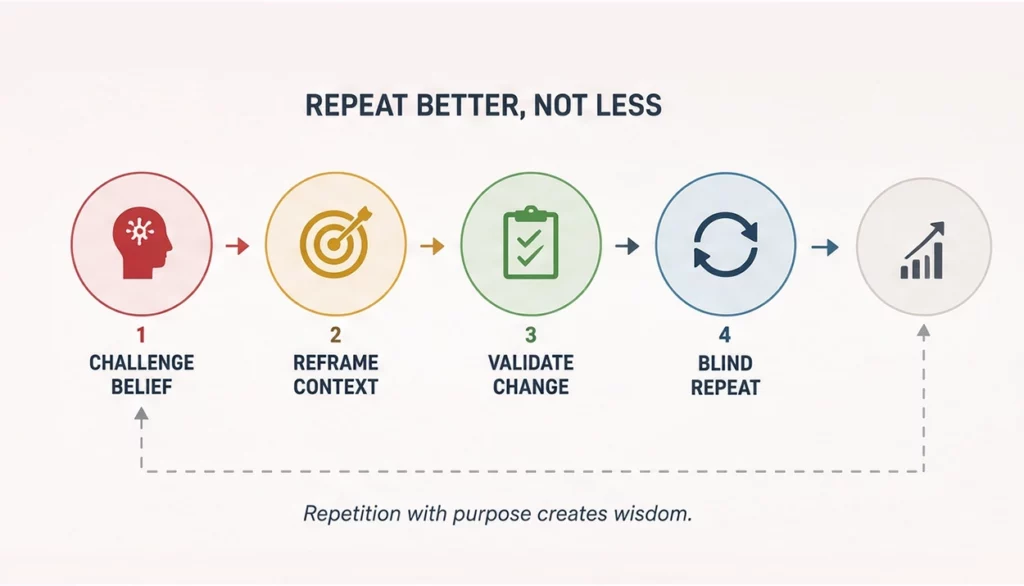
This does not mean organizations should stop repeating research.
In fact, some repetition is essential. Markets change, consumers evolve, categories shift and previous learning must often be revalidated. A brand that never revisits assumptions can become overconfident in outdated truths.
The issue is not repetition. The issue is blind repetition.
A learning-rich organization does not ask the same question again because it forgot the previous answer. It asks again because something has changed, because the stakes are higher, because the market context is different, or because the decision requires fresh validation.
That distinction matters.
- Repeating research to validate change is discipline.
- Repeating research because the organization has lost memory is waste.
- Acting on old learning without revalidation is overconfidence.
- Acting on new data without past context is shortsighted.
Learning richness is not about eliminating repetition. It is about knowing when to reuse, when to refresh and when to challenge what the organization believes it already knows.
AI will Make Weak Learning Systems Faster, Not Smarter
AI will transform the insights industry. It can accelerate analysis, summarize information, detect patterns, support research design, improve knowledge discovery and make teams more productive.
But AI does not automatically create better judgment.
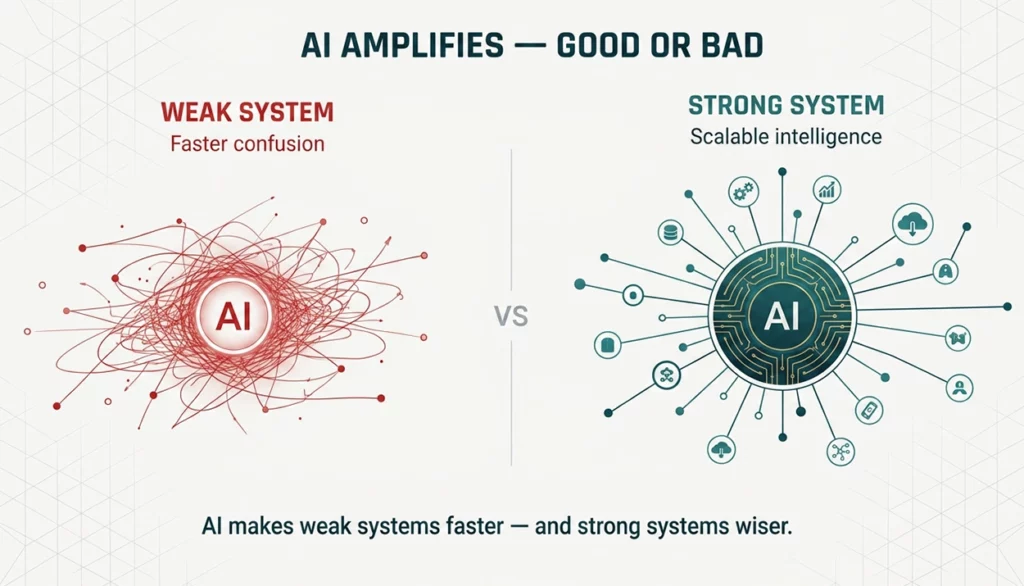
If an organization has strong learning systems, AI can help it synthesize faster, connect knowledge better and scale intelligence across teams. If an organization has weak learning systems, AI may simply accelerate confusion. It may produce faster summaries of disconnected knowledge. It may make weak assumptions look more confident than they should.
The Risk In The AI Era Is Not Only Bad Data. It Is False Confidence.
Fast answers can feel like strong answers. Fluent summaries can feel like truth. Automated outputs can appear more complete than they really are. But without human context, quality discipline and business interpretation, speed can become dangerous.
AI will not make weak learning systems smarter. It will make them faster.
That is why human intelligence becomes more important.
Consumers are not just data points. They are emotional, cultural, social, and often contradictory. They carry memory, aspiration, anxiety, habit, identity, and context. They do not always behave in ways that are linear or predictable.
- AI can help us move faster. Human intelligence helps us understand what matters.
- AI can help us find patterns. Human intelligence helps us interpret meaning.
- AI can help us generate possibilities. Human intelligence helps us judge relevance.
- AI can help us process more information. Human intelligence helps us ask better questions.
The future of insights is not human versus AI. It is human intelligence working with AI-enabled capability.
Primary Research Is The Human Grounding Layer
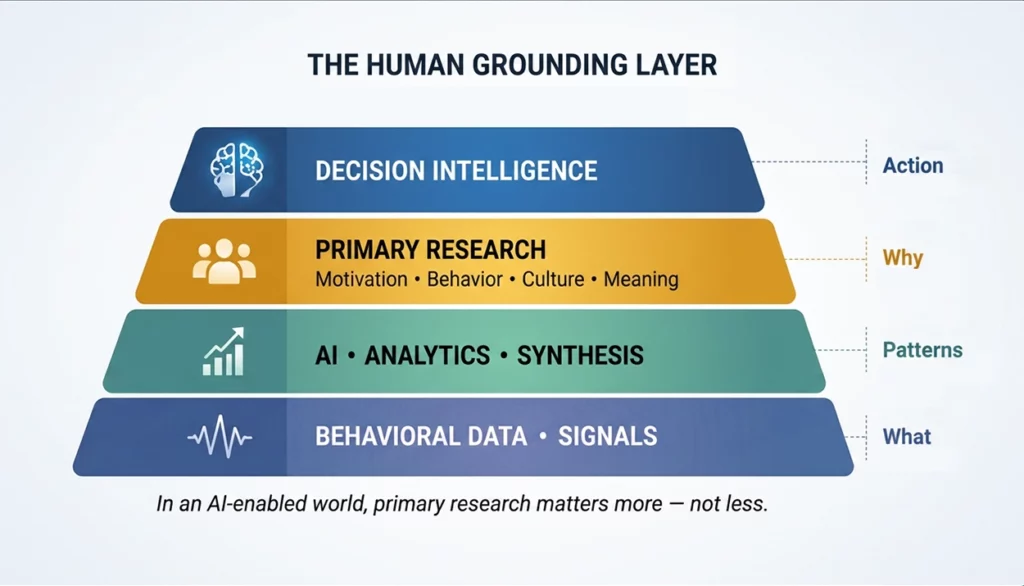
In an AI-enabled world, primary market research becomes more important, not less.
Primary research gives organizations direct access to human reality. It helps brands hear what people think, feel, expect, fear, value, and need. It captures motivation, emotion, perception, aspiration, and unmet demand. It helps explain not only what people do, but why they do it.
That distinction matters.
Behavioral data can show what happened. AI can generate explanations. Analytics can reveal patterns. But primary research gives brands access to the human meaning behind those patterns.
As synthetic data, AI-generated personas, and automated analysis enter research workflows, real human input becomes the grounding layer. Synthetic approaches may have value when used responsibly and transparently. But they cannot replace the need to stay connected to real people and genuine human experience.
A learning-rich organization cannot be built on weak inputs. If the human data is poor, biased, synthetic without governance or disconnected from reality, the learning system will only scale misunderstanding faster.
Primary research is not the only learning source. But it plays a distinct role because it gives organizations direct access to motivation, meaning, and human explanation.
- It reminds brands that people are not averages.
- Markets are not only models.
- Consumers are not only behavioral signals.
- Culture cannot be fully reduced to structured data.
- Brand meaning cannot be fully inferred from transactions.
For modern businesses, primary research is not a legacy method. It is one of the most important learning engines for the future.
What Makes an Organization Learning-rich?
A learning-rich organization continuously converts human understanding, market signals, AI-enabled analysis, and decision outcomes into reusable organizational intelligence.
It does not treat research as a series of isolated projects. It builds learning loops across consumers, markets, data, teams, decisions, and outcomes.
A straightforward way to think about this is through the Learning Insights Loop.
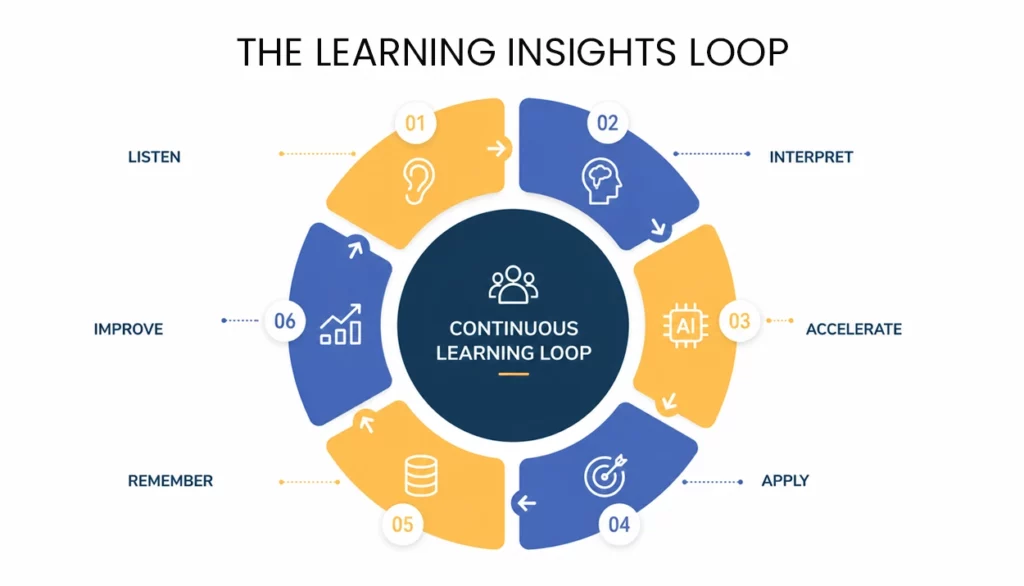
- Listen to real human signals from consumers, customers, professionals, patients, citizens, and markets.
- Interpret meaning through human judgment, context, culture, emotion, and contradiction.
- Accelerate synthesis through AI, analytics, automation, and knowledge systems.
- Apply learning to decisions across marketing, product, customer experience, innovation, and strategy.
- Remember what was learned so the organization does not begin from zero every time.
- Improve through feedback from outcomes, decisions, and market response.
This loop is what separates an organization that produces information from one that builds intelligence.
From Project Factory to Learning System
Many insights functions still operate like project factories.
A business question arrives. A study is designed. Data is collected. A report is delivered. A presentation is made. The team moves to the next project.
That model can produce outputs. But it does not always create cumulative intelligence.
The future requires a different model.
| Traditional Insights Function | Learning-Rich Insights Organization |
| Runs studies | Builds learning loops |
| Delivers reports | Improves decisions |
| Stores outputs | Builds institutional memory |
| Measures activity | Measures decision impact |
| Uses AI for speed | Uses AI for scalable learning |
| Works reactively | Anticipates strategic questions |
| Answers briefs | Shapes business choices |
Consumer understanding is no longer episodic. It is continuous.
Markets do not wait for annual planning cycles. Consumers do not change only during research windows. Culture does not move according to reporting calendars. Business teams need intelligence that can keep pace with decisions.
This is why the insights function must evolve from a project engine into a learning system.
The CXO View: Learning Richness Needs an Operating Model
Becoming learning-rich is not only a research ambition. It is an operating model challenge.
It requires workflows that move at the speed of business without sacrificing quality. It requires governance around AI usage. It requires teams that can combine human judgment with technology. It requires knowledge systems that preserve learning. It requires stronger collaboration between insights, marketing, product, customer experience, strategy, data, and leadership teams.
The challenge is not only methodological. It is organizational.
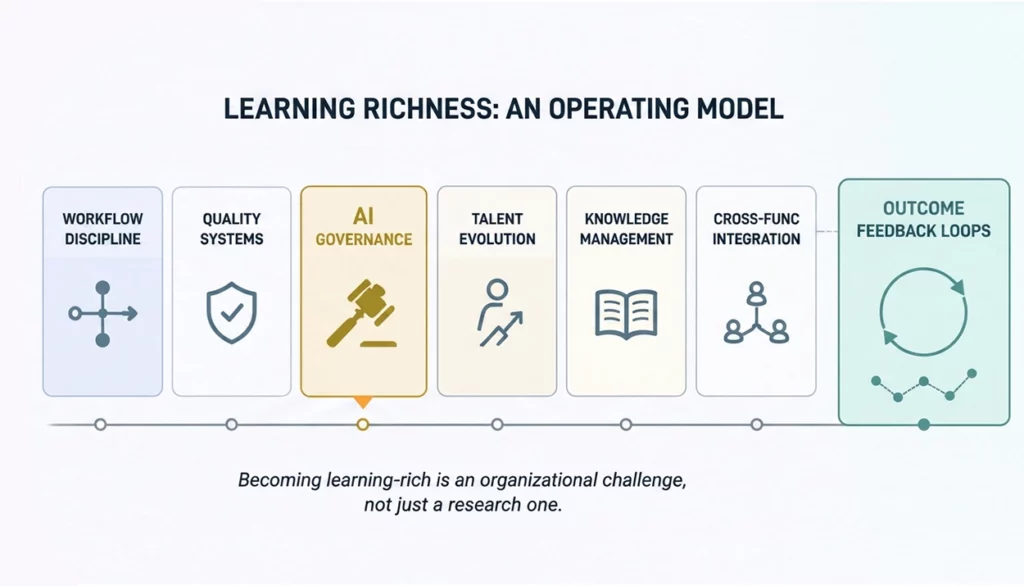
A learning-rich insights organization needs discipline in seven areas.
- Workflow discipline so insights can be generated faster and more consistently.
- Quality systems so leaders can trust the inputs and outputs of research.
- AI governance so automation is used responsibly, transparently, and meaningfully.
- Talent evolution so researchers become interpreters, advisors, and intelligence partners.
- Knowledge management so learning is not lost across teams, markets, or time.
- Cross-functional integration so insights influence significant business choices.
- Outcome feedback loops so organizations understand whether insights improved decisions.
The last point is critical.
Decision memory is not only a knowledge management concept. It is a measurement discipline. Organizations must learn not only from what consumers said, but from what happened after the business acted.
- What did we believe?
- What did we decide?
- What happened?
- What did we learn?
- What should we do differently next time?
This is how insights become cumulative and organizations become wiser over time.
The Real Output Of Insights Is Decision Confidence
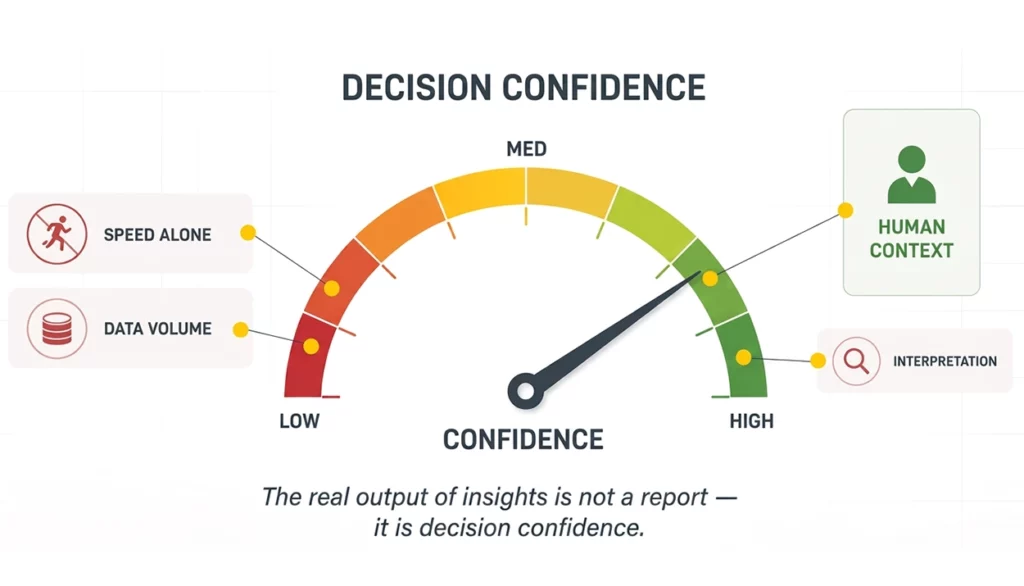
The final output of insights is not a report. It is decision confidence.
Reports, dashboards, presentations, and data tables matter. But they are carriers of value, not the value itself. The true value of insights is created when leaders can make better decisions because they understand the consumer, the market, the opportunity, and the risk more clearly.
Decision confidence does not come from speed alone. It comes from the combination of evidence, human context, quality, interpretation, relevance, and timing.
- A fast answer that is not trusted does not create confidence.
- A large dataset without meaning does not create confidence.
- An AI-generated summary without human judgment does not create confidence.
- A dashboard without business interpretation does not create confidence.
Confidence comes when insights connect evidence to the decision that needs to be made. That is why organizations need to move beyond output metrics.
What Brands Should Expect From Insights Partners Now
As the insights industry changes, brands should also rethink what they expect from insights partners.
The question should not only be:
Can this partner execute a study?
The better question is:
Can this partner help us become a better learning organization?
That changes the evaluation criteria.
Brands should ask whether their partners help them learn continuously or research periodically. They should ask whether work is connected to business decisions and outcomes. They should ask whether AI is being used responsibly and meaningfully. They should ask whether real human voices remain central. They should ask whether learning is captured, reused, and strengthened across studies.
They should also ask whether their partners help them think.
This does not mean every research partner must become a strategy consultant. But the strongest partners will go beyond execution. They will bring perspective, interpretation, quality discipline, technological fluency, and human understanding.
If brands are going to make important decisions based on insights, they need to trust how those insights were created.
- They need transparency.
- They need responsible methods.
- They need real human grounding.
- They need partners who understand that speed without trust can become dangerous.
The best insights partners of the future will not only answer research questions. They will help organizations build learning advantage.
From Data-driven To Learning-driven
The insights industry is at an important moment.
For years, it has helped organizations collect data, understand consumers, measure markets, and explain behavior. That role remains critical. But the next responsibility is larger.
The industry must help brands move from data-driven to learning-driven.
That means helping organizations connect real human understanding with AI-enabled intelligence. It means building systems that preserve learning instead of losing it. It means helping business teams interpret change, not only measure it. It means linking research to outcomes and decisions, not only outputs. It means protecting trust, quality, and human context in an era of accelerating automation.
The most successful brands of the future will not simply be data rich. They will be learning rich.
In a world where change is constant and decisions carry greater risk, the organizations that learn better will decide better. And the organizations that decide better will build stronger brands, deeper customer relationships, and more resilient growth.