

A product can meet consumer needs today and still miss what buyers will value next. For brand and innovation teams, the challenge is deciding which changes deserve attention while there is still time to respond. Consumer foresight helps teams investigate those changes before committing to a direction.
Consumer foresight is the practice of identifying early signals of change in consumer needs and behaviour and assessing what they could mean for future business decisions before those changes become mainstream.
It helps brand and innovation teams explore new opportunities, shape products, and develop communication around expectations that may matter more over time. An early signal might be a new reason for choosing a product, a different way of using it, or frustration with an existing option.
The task is to understand what sits behind that signal and whether it deserves further investigation. An early signal might be a new reason for choosing a product, a different way of using it, or frustration with an existing option. The task is to understand what sits behind that signal and whether it deserves further investigation.
Consumer foresight does not promise a single, certain future. As the OECD explains, it is about exploring plausible futures and preparing for change.
These answers are essential for managing performance in the present, but they can arrive after a shift has already begun.
Consumer foresight looks for earlier movement. A small group may be trying a new format, using a product in a different way or expecting a higher standard before those behaviours become common. Understanding that group can help a team consider what to build, how to position it and what evidence to collect next.
Consumer insight explains behaviour and the reasons behind it. Consumer foresight uses that understanding to explore how needs and choices could develop, and what a brand might need to do next.
Comparison | Consumer insight | Consumer foresight |
Core question | What matters to consumers and why? | What could matter more in the future? |
Focus | Understanding choices, experiences and motivations | Exploring emerging needs and possible changes in choice |
Use in a product brief | Address a need consumer already express | Investigate a need that may become more important |
The two work together. Consumer research can reveal emerging trend changes as well as explain current behaviour. Foresight adds a deliberate focus on what those changes could mean for the future.
Consumer foresight solution helps teams decide which opportunities to explore and how to develop them. It is especially useful when decisions must be made well before a product or campaign reaches the market. Consumer behaviour forecasting explores how factors such as price, trust and changing routines could influence what people buy next.
Innovation priorities: Identify unmet needs worth exploring before committing to a product direction.
Product and packaging choices: Investigate how changing routines could affect features, formats or ease of use.
Communication: Understand which benefits and motivations could become more relevant to consumers.
Brand planning: Assess whether the brand’s offer is keeping pace with changing expectations.
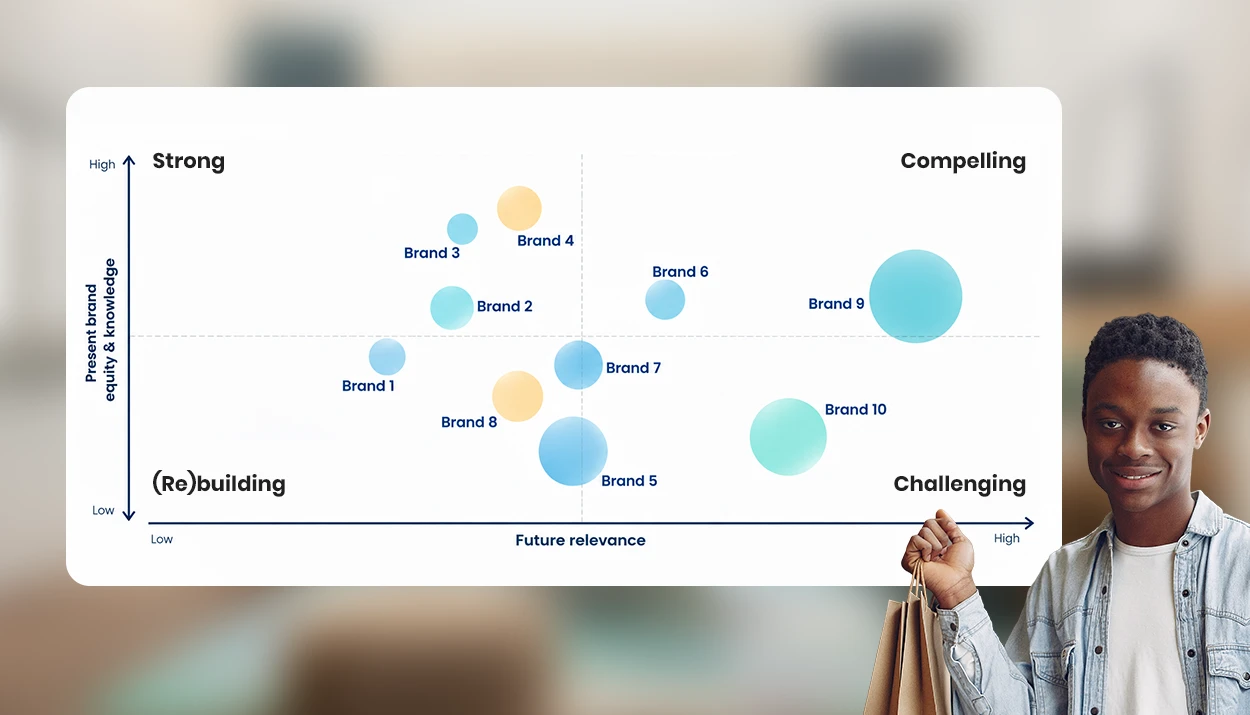
Start with a business question, explore changes in behaviour, and test whether those changes matter beyond the first group showing interest. Early changes in how consumers choose and use products can offer clues about future market trends.
A practical approach includes five steps.
Define what the research needs to inform. Are you choosing a direction for a new product, reviewing packaging, or exploring a new service? Set a relevant time horizon so the findings relate to a real planning decision.
Review what consumers buy, use, question or avoid. Customer feedback, category research and conversations can provide clues. Qualitative research, including interviews and group discussions, helps explore the reasons behind those clues: the frustration being solved, the benefit being sought, or the compromise being made.
Consumers who are already trying new ideas can offer an early view of changing expectations. Focus on their relationship with the category, rather than assuming a certain age group always leads change. Someone might adopt a new payment service quickly while remaining loyal to familiar food brands.
Ask what attracted them, what they still find difficult and what would make the experience more useful. Their responses are starting points for investigation, not a substitute for understanding the wider market.
Use quantitative research to measure how needs and preferences vary across the audiences relevant to your decision. Explore practical barriers such as price, availability, trust or the effort involved in changing a habit. Interest in an idea does not, on its own, establish future demand.
Translate the findings into a concept, product change or message that can be tested. Decide what evidence would justify taking it further and revisit the assumptions as consumer research develops.
Look for an underlying need, repeated behaviour and evidence beyond a single conversation or channel. A burst of attention is a reason to investigate, not proof that a market is changing.
No single check can guarantee that a trend will last. The following questions help a team decide whether to test an opportunity, keep watching it or set it aside:
Consider a hypothetical household-care brand noticing growing conversation around the chemicals in everyday cleaners. Rising health consciousness might suggest an opportunity in natural formulations, but it wouldn’t explain what would actually make consumers switch from products they already trust.
The brand could speak with people already choosing natural cleaners to understand what drove the switch and where those products still fall short often cleaning performance or price. A wider survey could then test how widely that concern holds, and whether proving equal performance would be enough to shift behaviour.
The useful outcome is a specific development question: would a natural formula that cleans just as well encourage health-conscious consumers to switch and stay switched? That gives product and marketing teams something concrete to investigate.
Consumer foresight can add context to brand tracking, innovation studies and customer experience research. It does not remove the need to understand current customers or measure how the brand is performing.
For example, brand tracking can show changes in awareness, preference or usage. A foresight perspective can help explore whether emerging expectations could affect the brand’s relevance in the future. Concept testing can then examine how consumers respond to a proposed solution.
Each contributes to a different part of the decision, from understanding change to evaluating a response.
One approach to operationalizing consumer foresight is identifying “trendsetters” within a category consumer who are early to notice and adopt change and studying what their mindsets and behaviours suggest about where the category is heading. This is the model behind futuriZm, Borderless Access’s consumer foresight solution, which integrates into strategic research, innovation studies, and brand health tracking to help teams prepare for change rather than forecast exact outcomes.
The findings help teams develop future-oriented ideas for products, packaging and communication. The approach can be integrated into strategic research, innovation studies and brand health tracking. As a consumer foresight solution, futuriZm helps brands use early signals of change to shape product, packaging and communication decisions.
Trendsetters are consumers who are informed, involved, and independent in their thinking. They are comfortable with digital tools, they care about authenticity and originality, and they tend to be socially aware. They are often among the first to try something new and the first to share their opinion about it.
Trendsetters are not the same as early adopters. Early adopters are often exploratory and willing to take risks on new products. Trendsetters go a step further: they are also discerning. They look for things that feel genuine and worth talking about.
Spot What’s Changing Before It’s Mainstream. Talk to our consumer foresight experts to uncover emerging consumer needs.
Can consumer foresight predict whether a product will succeed
Consumer foresight can reveal opportunities and adoption barriers, but it cannot guarantee product success. Teams still need to test the offer with relevant audiences and consider price, availability, competition and the experience of using the product.
Is consumer foresight the same as trend forecasting
The terms can overlap. Future trend forecasting generally focuses on the likely direction of change. Consumer foresight also asks what different possible changes would mean for the business and how it should prepare. Neither should be treated as certainty about future demand.
Is consumer foresight only useful for technology brands
No. Consumer foresight applies wherever expectations are shifting which is most categories. In food and beverage, this might mean changing attitudes toward convenience versus health. In financial services, it might mean shifting trust in digital-first providers. The discipline is the same regardless of category: identify early signals, then test how far they extend.
Can early adopters represent the whole market
Not on their own. Early adopters can offer clues about emerging needs, but their priorities may differ from those of other consumers. Wider research is needed to assess how far an opportunity extends and what could limit adoption.
When should a brand use consumer foresight
Use it early enough to influence decisions, such as when setting innovation priorities, exploring a new category or developing a product brief. It can also help teams revisit assumptions when consumer expectations begin to change.
What could your consumers need next
The next opportunity may begin with a need your current offer does not fully address. Understanding it early gives your team a clearer question to explore before committing resources.
© 2026 Borderless Access Pvt Ltd. All Rights Reserved.