

Think about the last time a brand seemed to understand exactly what you needed before you even said it out loud. That is not a coincidence. Behind most smart business decisions is a conversation that happened first, with real people who represent the market, the customer, or the patient. A market research panel is how those conversations happen at scale.
A market research panel is a pre-recruited group of individuals who have agreed to participate in research studies over time. Panel members are profiled, verified, and invited to share their opinions, behaviours, and experiences when relevant studies are run. They are the bridge between a research question and a real-world answer.
This guide explains what market research panels are, the different types, how they are built and maintained, what makes one panel better than another, and what to look for when choosing a panel provider for your next study.
A market research panel is a database of pre-screened individuals who have opted in to participate in surveys, interviews, product tests, and other research activities. Unlike a one-off sample recruited fresh for a single study, panel members are registered in advance and can be called upon repeatedly for studies that match their profile.
Panels are organised around profile data: demographics, behaviours, interests, professional roles, health conditions, purchasing habits, and dozens of other attributes. This profiling is what makes a panel useful. When a brand needs to survey smartphone users aged 25 to 35 who have purchased a competitor’s product in the last three months, a well-built panel can identify and reach those people quickly and accurately.
The value of a panel lies in three things working together: the size and geographic reach to deliver sufficient sample for any given study, the depth of profiling to target with genuine precision, and the verification processes that ensure panellists are real, genuine, and engaged.
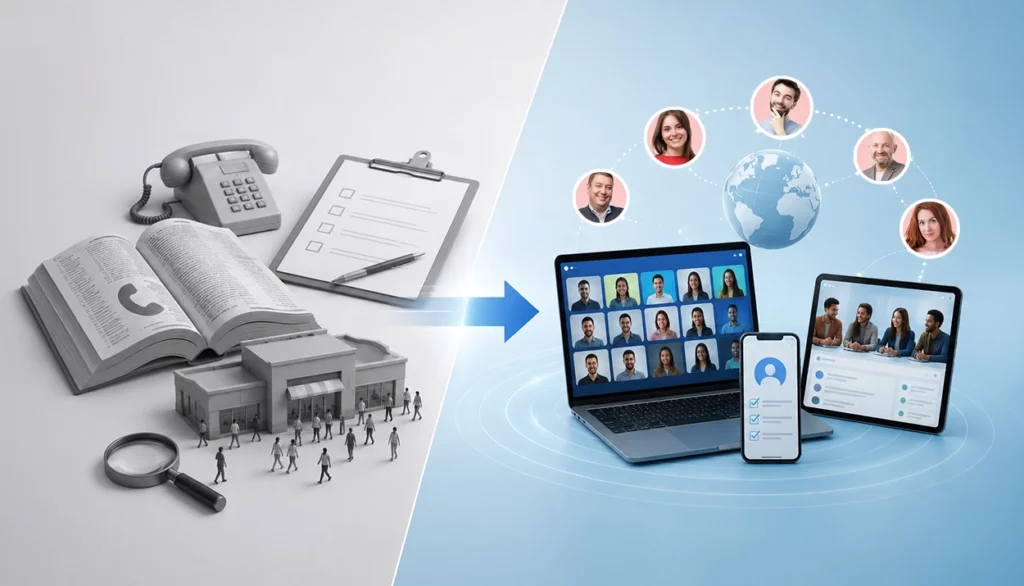
Before online panels became the norm, research samples were built through telephone directories, random digit dialling, mall intercepts, or custom recruitment for each study. Each of these approaches was slow, expensive, and difficult to replicate consistently.
Online panels changed this by creating a standing pool of willing participants who can be reached quickly, filtered by profile, and surveyed at a fraction of the time and cost of traditional methods. Today, online panels power the vast majority of quantitative market research globally, and increasingly support qualitative research through online focus groups, digital communities, and ethnographic studies conducted over video.
Not every panel is built for every research question. Understanding the differences helps match the right panel to the right study.
Consumer panels provide access to general population audiences as well as highly targeted consumer segments. They help brands understand buyers, users, and non-users across a wide range of research objectives, including brand tracking, product testing, advertising evaluation, pricing research, customer satisfaction, and usage and attitude studies.
The effectiveness of a consumer panel depends not on its size alone, but on the quality of its profiling, verification processes, and respondent engagement. Deep audience attributes and active panel management enable researchers to reach the right consumers with confidence.
Borderless Access operates a global consumer panel comprising over 8 million verified respondents across 40 markets, completing more than 10 million surveys annually.
Beyond broad consumer representation, our panel includes a wide range of hyper-niche audiences, including:
Our robust profiling framework enables highly targeted sampling, helping brands conduct everything from brand tracking and concept testing to advertising evaluation, pricing research, customer experience studies, and usage & attitude research with greater confidence and precision. This extensive profiling enables brands to access precisely defined audiences for reliable, high-quality consumer research.
Download our Global Panel Book to explore the scale, reach, and quality behind our proprietary panel ecosystem.
B2B panels consist of business professionals profiled by their role, seniority, industry, company size, and decision-making authority. Unlike consumer research, B2B studies require respondents to be identified based on professional responsibilities rather than demographics alone.
Reliable B2B research depends on accurately verifying professional identities and understanding each respondent’s role in the purchasing process. Without this level of verification, research findings can easily become misleading.
Borderless Access provides access to over 2.75 million verified business professionals across 40 global markets, profiled across decision-making authority, job title, company size, industry, and functional role.
Respondents are classified into three distinct decision-making tiers:
This level of profiling allows researchers to engage exactly the stakeholders required for each study.
Verification follows a rigorous five-stage process, including dedicated recruitment, double opt-in confirmation, mobile authentication, mandatory social media verification, and continuous behavioural monitoring to maintain panel quality.
Download our B2B Panel Book to learn how Borderless Access helps brands connect with verified professionals across industries, functions, and global markets.
Healthcare panels provide access to physicians, patients, allied health professionals, and caregivers. Because healthcare research often informs clinical, commercial, and regulatory decisions, participant verification, privacy requirements, and consent standards are significantly more rigorous than those used in general consumer research.
Healthcare panels require careful verification of medical credentials, prescribing authority, specialties, and patient eligibility to ensure reliable research outcomes.
Borderless Access offers a global healthcare panel covering 57 markets, including access to:
Healthcare participants are verified using medical licences, specialty credentials, prescribing authority, and condition-specific eligibility, depending on study requirements. All research follows stringent consent, privacy, and data governance standards appropriate for healthcare studies.
Our healthcare panel supports pharmaceutical and medical device research, patient experience studies, treatment pathway research, health economics, and consumer health initiatives requiring trusted healthcare audiences.
Download our Healthcare Panel Book to discover how Borderless Access connects you with verified healthcare professionals, patients, and caregivers across global markets.
Panel size is the most visible differentiator between providers, and also the least informative one on its own. A panel of 100 million nominally registered members that includes significant proportions of bots, duplicate identities, and disengaged respondents will produce worse research outcomes than a panel of 8 million genuinely verified and actively engaged participants.
The dimensions that actually predict research quality from a panel are more nuanced.
The process by which someone joins a panel determines whether their presence in it means anything. At a minimum, double opt-in processes confirm that the person who registered controls the contact details they provided. Social media verification, mobile authentication with one-time passwords, and professional credential checks for B2B and healthcare audiences add layers that filter out fraudulent or misrepresented registrations before they enter the active panel.
The difference between a panel that applies these checks and one that simply accepts self-reported profiles is the difference between data you can trust and data that passes a surface inspection while being wrong underneath.
Verification at sign-up addresses one problem: fraudulent entry. It does not address a second problem: panellists who drift in quality over time. Someone who was a genuinely engaged respondent when they joined may become a speedthrough survey-taker six months later, clicking through questions without reading them to collect incentive points.
Quality monitoring that runs continuously, not just at panel entry, uses machine learning to identify behavioural patterns associated with disengagement and fraud and removes low-quality respondents before they participate in live studies. This is what maintains panel quality at scale rather than allowing it to degrade as the panel grows.
Targeting a panel accurately requires profiling data that goes well beyond age, gender, and location. Consumer panels with deep attribute profiling can reach specific sub-groups: people who own a particular type of vehicle, subscribers to specific streaming platforms, buyers of a specific product category in the last month, individuals managing specific health conditions alongside certain financial product holdings. B2B panels with accurate professional profiling can reach IT decision-makers in mid-market manufacturing firms, or CFOs in financial services companies with more than 1,000 employees.
The difference between deep and shallow profiling is the difference between reaching the exact audience a study requires and reaching a broadly similar audience that produces findings with limited precision.
Research increasingly needs to operate across multiple markets simultaneously. A panel that is deep in large developed economies but thin in high-growth markets will limit the scope of multi-market studies to the markets where it has genuine strength, requiring custom recruitment in the markets it cannot deliver. A genuinely global panel has sufficient verified respondents in both established and emerging markets to field multi-country studies consistently without changes in sampling approach that would undermine cross-market comparability.
A panel is the starting point, not the end point. The quality of the research that comes out of a panel is shaped by everything that happens from that starting point forward.
Borderless Access operates a research workflow that runs from problem definition through to final reporting, with AI and human expertise applied at each stage.
The process begins with problem definition, combining AI-driven market analysis with expert research strategists to define study objectives and ensure the research question is correctly framed before any design work begins. Questionnaire design uses AI-assisted tools to craft engaging, conversational surveys tailored to different audience segments, with bias detection built into the process rather than applied as an afterthought. Survey scripting uses automated technology and AI-powered logic validation to ensure error-free survey flow across complex studies without the manual errors that typically accompany intricate routing and quota structures.
Panel recruitment and sampling applies machine learning algorithms to identify the highest-quality respondents, prevent fraud, and optimise sampling in real time based on behavioural and demographic data. Data collection runs an ML-powered quality management programme across all fieldwork stages to ensure high-quality data delivery. Quality control and validation uses ML models to analyse response patterns and flag inconsistencies, with human analysts reviewing final quality checks before the data moves forward.
Learn how we helped a leading QSR brand use verified market research panels to develop and refine product concepts for a new culturally informed customer segment.
Data processing and cleaning applies automated algorithms to remove outliers and inconsistencies. Data analysis extracts insights using AI-driven analytics while human researchers contextualise and interpret findings for strategic relevance. Reporting uses interactive dashboards that translate complex data into the clear, decision-ready format that actually influences what happens next.
The formula that underpins this workflow is straightforward: genuine respondents plus research rigour plus smart technology produces actionable insights and data you can rely on.
Research data is only as reliable as the security and governance frameworks that protect it. For brands and research buyers, this is not a secondary consideration. It directly affects whether findings can be shared internally, used to support regulatory submissions, or built into commercial decisions with confidence.
Borderless Access holds ISO 27001:2022 certification for information security management and ISO 27701:2019 certification for privacy information management. Research operations conform to GDPR and CCPA requirements, covering data collection, storage, consent management, and personal information handling. AI-driven fraud prevention detects and eliminates fraudulent activity in real time, and automated quality control applies scoring algorithms that instantly flag inconsistencies while proactively correcting anomalies before data reaches delivery.
The combination of certified security governance with AI-powered quality controls means that the data delivered from a Borderless Access research programme is not just statistically processed. It has been validated at every stage of its journey from respondent to report.
Market research panels are used across any industry where understanding people’s opinions, behaviours, or experiences informs a decision. The industries that use panel-based research most actively include the following.
Advertising and media brands use panels to test creative, measure campaign effectiveness, track brand health, and understand how audiences engage with content across channels.
Automotive and mobility companies use panels to reach vehicle owners and in-market buyers at specific points in the purchase journey, and to understand shifting attitudes toward electric vehicles, mobility services, and connected technologies.
Banking, financial services, and insurance organisations use panels to understand product preferences, measure trust and brand perception, research pricing sensitivity, and study the decision-making process for complex financial products.
Consumer packaged goods and retail brands use panels at scale for product testing, concept development, shopper behaviour research, and ongoing brand tracking.
E-commerce platforms use panels to study purchase behaviour, customer experience, and the factors that drive conversion and retention in a channel where consumer expectations shift rapidly.
Food and beverages and quick service restaurants companies use panels for product development, taste testing, menu concept evaluation, and understanding how food culture and consumer preferences differ across markets.
Healthcare and life sciences organisations use healthcare panels specifically to reach physicians, patients, and allied health professionals for clinical pathway research, treatment attitude studies, and patient experience measurement.
Sports and gaming companies use panels to study fan behaviour, engagement with streaming and live events, in-game purchase behaviour, and the growing intersection between sports fandom and digital participation.
Technology and telecommunications brands use panels for product launch research, feature prioritisation, competitive benchmarking, and understanding adoption barriers among different user segments.
Travel and tourism organisations use panels to study booking behaviour, destination preference, loyalty programme attitudes, and the impact of external events on travel intent.
Verified respondents, not just registered ones. Ask specifically how panellists are verified, not just how many there are. Double opt-in, mobile authentication, social media verification, and credential checks for specialist audiences are the markers of a panel built with quality in mind. Registration headcount without verification is just a number.
Continuous quality monitoring, not a one-time check. A panel’s quality at sign-up is not its quality six months later. Ask whether quality monitoring runs continuously throughout a panellist’s membership or only at the point of recruitment.
Genuine global reach, not global presence. There is a difference between having a panel relationship in a market and having verified, deeply profiled respondents in that market. For multi-country studies, the depth and consistency of panel quality across all target markets matters as much as whether a provider can technically field in a given country.
Profile depth that matches your targeting needs. Consumer attribute breadth, B2B professional profiling across all relevant dimensions, or healthcare credential verification. The panel’s profiling capability should match the precision your research actually requires.
Security and privacy certifications. ISO 27001 for information security and ISO 27701 for privacy management are the relevant international standards. GDPR and CCPA compliance matters for any research involving respondents in Europe or the United States. Ask for specific certifications, not general assurances.
End-to-end research support. Panel access alone is not research. The quality of the research workflow built around the panel, from questionnaire design through analysis and reporting, determines whether you receive data or insight.
The quality of your research is only as good as the panel that delivers the right respondents who are verified, profiled, and monitored consistently. It is the foundation on which every insight you produce either stands or falls.
Want to know more about how Borderless Access operates a verified global panel ecosystem spanning consumer, B2B, and healthcare audiences worldwide? Connect With Our Experts
1. What is a market research panel?
A market research panel is a pre-recruited group of verified individuals who participate in surveys, interviews, and other research studies. Panel members are profiled in advance, allowing businesses to quickly reach the right audience and collect reliable insights for faster decision-making.
2. Why should I use a market research panel?
Market research panels save time, improve targeting, and deliver more consistent data quality. Instead of recruiting new participants for every project, researchers can access verified consumers, professionals, or healthcare audiences that match specific study requirements, reducing fieldwork timelines and recruitment costs.
3. How do I choose the right market research panel provider?
Look for a provider with proprietary panels, rigorous respondent verification, advanced fraud detection, broad geographic coverage, and expertise in reaching niche audiences such as B2B professionals or healthcare specialists. Strong data quality processes are just as important as panel size.
4. What types of audiences can market research panels help me reach?
Modern market research panels provide access to a wide range of audiences, including general consumers, business decision-makers, healthcare professionals, patients, shoppers, and other hard-to-reach or niche segments across global markets.
5. What makes a high-quality market research panel?
A high-quality market research panel is built on verified respondents, continuous fraud prevention, accurate profiling, and active panel management. Providers that combine proprietary panels with AI-powered quality checks and global recruitment capabilities are better equipped to deliver reliable, actionable insights.
© 2026 Borderless Access Pvt Ltd. All Rights Reserved.